
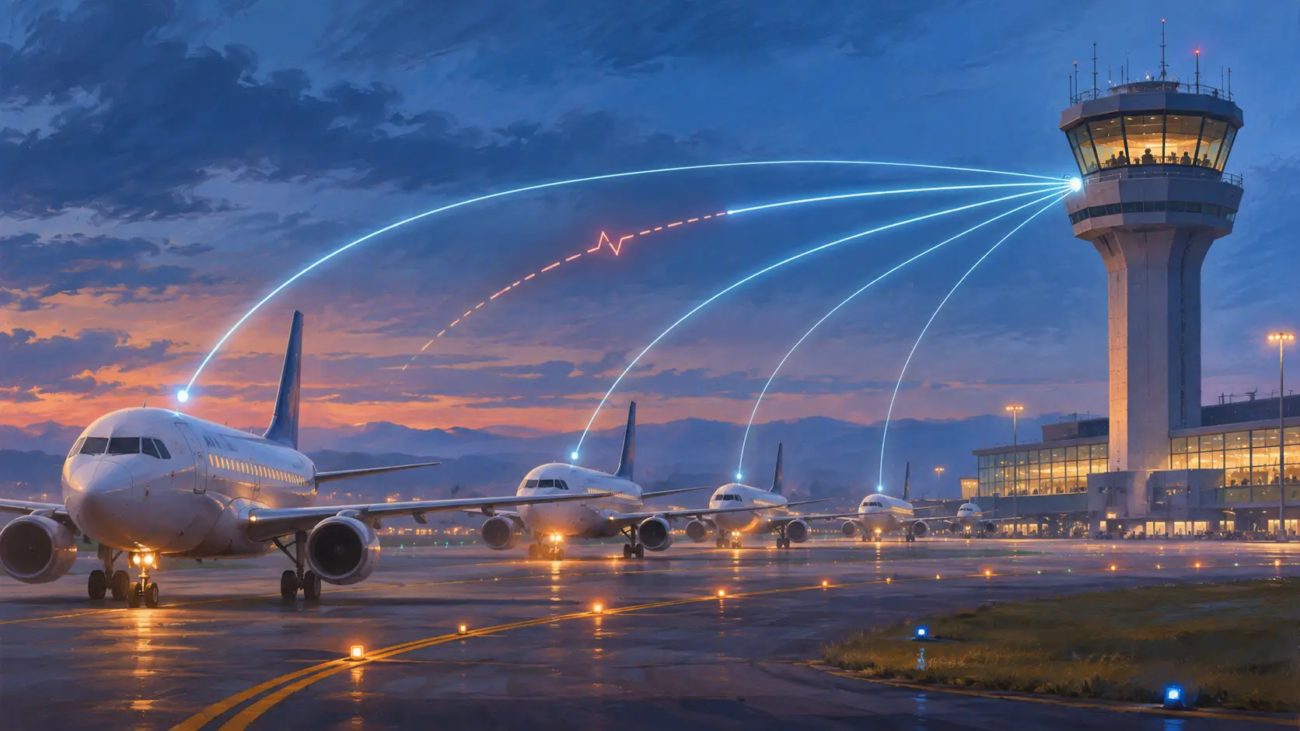
The FAA nationwide ground stop has been lifted, allowing departures to resume after a communications outage interrupted air traffic control operations Friday. For travelers and businesses, the announcement offers relief, but permission to depart does not mean every journey is back on schedule. The focus now turns to recovering from the disruption and understanding what caused it. Associated Press
What Caused the FAA Nationwide Ground Stop?
During an evening briefing, Transportation Secretary Sean Duffy attributed the disruption to switches and routers becoming overloaded with data and producing inconsistent information. He described instability affecting radar and communications at air traffic control centers and approach control facilities. That explanation identifies the reported equipment problem, while leaving investigators to determine why it occurred. ABC News reporting
Officials also addressed speculation about a cyberattack. Homeland Security Secretary Markwayne Mullin said the incident appeared mechanically driven and that officials had found no indication of malicious activity. When pressed, however, he acknowledged that the investigation continued and that a cyberattack had not been conclusively ruled out. The information described publicly therefore supports reporting an infrastructure outage under investigation, rather than a confirmed attack. ABC News reporting
Understanding the cause of the FAA nationwide ground stop matters because equipment failures, operational errors, and deliberate intrusions require different responses. The scale of a disruption alone cannot establish its cause. For businesses following the incident, the immediate lesson is to prepare for interruptions while allowing investigators to establish the facts.
What Travelers Should Expect After the Ground Stop
The end of a national departure restriction does not automatically restore every flight or connection. Duffy said returning to capacity would take time and expressed hope for better movement Saturday. Travelers should treat that outlook as an indication of expected improvement, rather than a promise that their itinerary will operate as originally scheduled. ABC News reporting
Anyone affected by the FAA nationwide ground stop should check the airline’s official app or website before leaving for the airport and continue monitoring notifications afterward. The FAA’s National Airspace System status page provides broader operational information, while airlines provide instructions for individual flights. Passengers should continue following check-in and arrival guidance because departure estimates can change during recovery.
Travelers with connections should review the entire journey before accepting a replacement flight. A later departure may leave too little time to reach the next gate, and a revised route may involve different baggage arrangements or an overnight stay. Asking about the final arrival time can help passengers compare options more effectively than focusing only on the next available departure.
Families facing an essential arrival deadline should decide when to use a fallback plan. Depending on the distance and circumstances, that could mean a later flight, an overnight stay, ground transportation, or postponement. Before buying another ticket or changing airports, confirm that the alternative is operating and review its cancellation terms.
Refunds and Expenses Following the FAA Nationwide Ground Stop
Passengers should understand their refund rights before accepting a voucher. Under U.S. Department of Transportation guidance, a passenger is entitled to a refund when an airline cancels or significantly delays or changes a covered flight and the passenger declines the changed flight, replacement transportation, vouchers, or other compensation. This protection applies regardless of the cause of the disruption. Passengers who want to take an offered replacement flight should pay attention to the airline’s acceptance deadline. DOT refund guidance
Hotel rooms, meals, and transportation expenses require a separate conversation with the airline. Commitments listed on DOT’s customer service dashboard generally concern disruptions within an airline’s control. Travelers affected by the nationwide flight disruption should ask what assistance applies before assuming additional expenses will be reimbursed, and they should retain receipts and written confirmations. DOT cancellation and delay dashboard
Staying Safe While Seeking Travel Assistance
The FAA nationwide ground stop also creates circumstances in which travelers may be especially receptive to unsolicited offers of help. The Federal Trade Commission warns that scammers impersonate airline representatives on social media, approaching frustrated passengers and requesting reservation details, personal information, or payment information. Contacting customer service through the airline’s official app, website, or verified phone number reduces the chance of reaching an impersonator. FTC guidance on airline impersonators
Travelers should avoid posting boarding passes or booking confirmation codes publicly. Employees arranging business travel should also follow their organization’s approval process when changing reservations or making unexpected payments. Urgency can make an unfamiliar request seem reasonable, so independently verifying who is asking for information remains important during a disruption.
Business Continuity Lessons from the FAA Nationwide Ground Stop
For businesses, the disruption illustrates how an external infrastructure problem can interrupt operations even when internal systems remain available. Employees may be unable to reach a customer, a shipment may miss its delivery window, or an event may lose a key participant. Organizations can prepare by identifying critical dependencies and deciding in advance how work will continue when those dependencies become unavailable.
During the immediate recovery, businesses should identify employees still traveling, assign someone to coordinate changes, and clarify approval for reasonable lodging and transportation expenses. Teams expecting urgent air shipments should contact their carriers about specific deliveries. Meetings dependent on an arrival Friday night or Saturday should have a remote or rescheduling option where practical.
The FAA nationwide ground stop also provides a useful opportunity to review technology preparedness closer to home. Businesses should examine backup communications, recovery procedures, monitoring, and responsibility for restoring essential services. Firma IT Solutions’ managed IT services include network management, monitoring, data backup, and disaster recovery support that can help organizations strengthen their own preparedness.
What Happens Next?
The next phase involves restoring travel and explaining the failure. Investigators will need to determine what overloaded the network, how the disruption spread, and what changes could reduce the chance of another interruption. Travelers should continue making decisions based on their confirmed flight information rather than assuming that lifting the ground stop has resolved every scheduling problem.
For business leaders, this incident is a reason to turn continuity plans into practical arrangements that employees understand and can use. If your organization needs help reviewing its technology risks and recovery priorities, contact Firma IT Solutions to discuss your needs. Preparing those arrangements before the next disruption gives your team clearer choices when essential services become unavailable.