
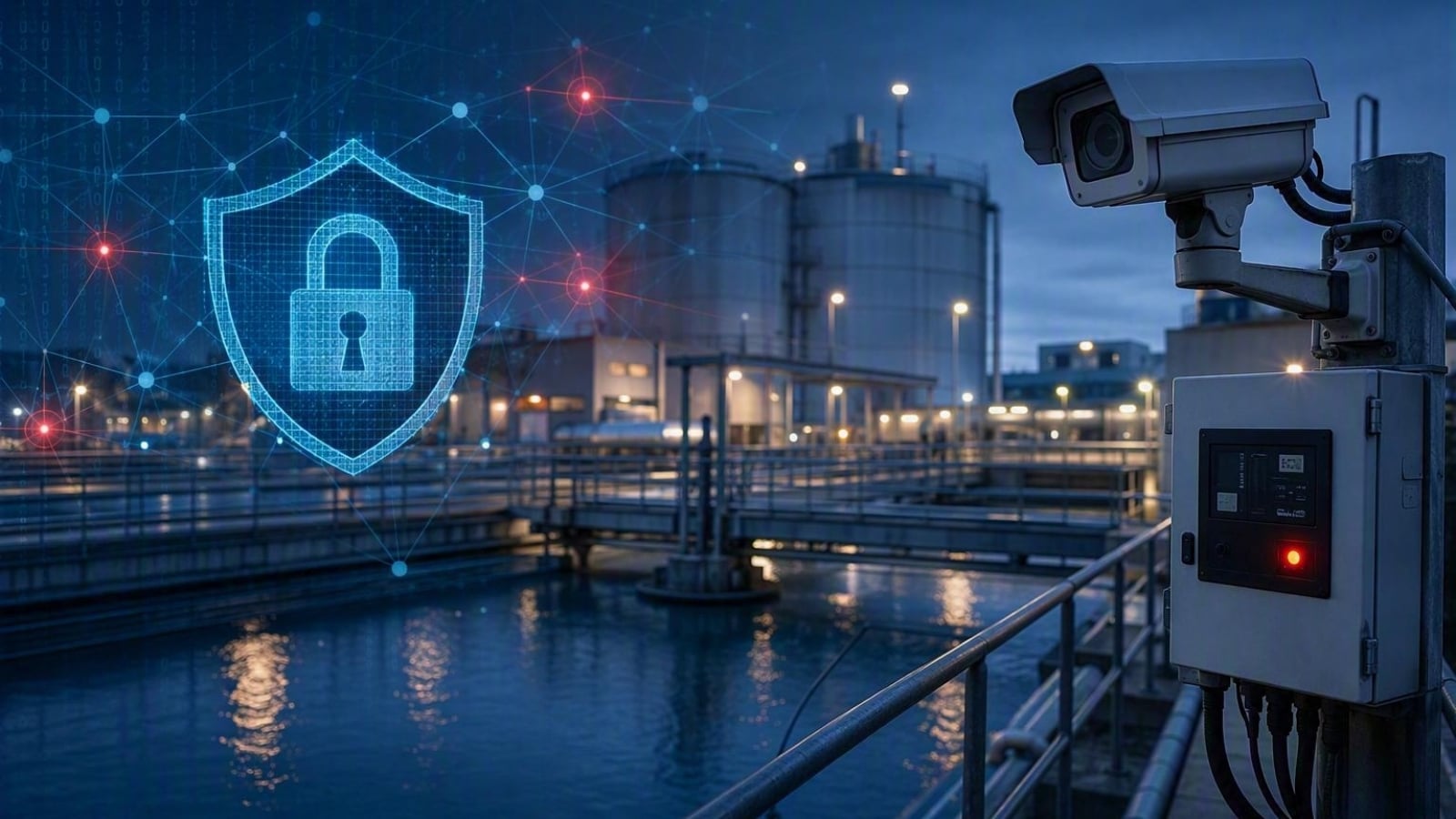

For years, cybersecurity professionals have warned that critical infrastructure would become a primary target for cybercriminals and nation-state actors. Unfortunately, we are now watching that prediction play out in real time.
In recent days, federal authorities reported cyberattacks targeting municipal water and wastewater systems across at least seven U.S. states. Some utilities were forced into manual operations, and more than 30 community water systems in Minnesota alone were reportedly affected. Federal agencies have warned that these attacks have the potential to disrupt water operations and threaten critical public services. [nbcnews.com], [cbsnews.com]
While no widespread contamination has been reported, the message is clear: America’s water infrastructure remains a high-value target.
Why These Attacks Matter
When people think about cyberattacks, they often picture stolen data, ransomware demands, or financial losses. Critical infrastructure attacks are different.
Water treatment plants control systems that directly impact public health and safety. If attackers gain access to operational technology (OT), industrial control systems (ICS), or SCADA environments, they can potentially manipulate processes that regulate water pressure, chemical treatment, and distribution operations. Federal and state authorities have warned that disruptions to water system operations can create serious risks for communities. [techtimes.com], [nbcnews.com]
The consequences can include:
- Service outages
- Boil-water advisories
- Emergency manual operations
- Environmental impacts
- Loss of public trust
- Significant financial and regulatory costs
In many cases, operators have been able to intervene before severe damage occurred. However, the fact that attackers continue to gain access demonstrates an uncomfortable reality: many critical infrastructure organizations still have exploitable weaknesses. [wisdiam.com], [thehill.com]
A Dangerous Trend Is Emerging
What concerns me most is not a single attack. It is the pattern.
Over the last several years, we have seen repeated attempts to target water facilities, energy providers, pipelines, healthcare organizations, and municipal governments. In many cases, attackers are not relying on sophisticated zero-day exploits. They are finding internet-exposed systems, weak credentials, poorly segmented networks, and unpatched devices. [thehill.com], [wisdiam.com]
That should be a wake-up call.
Many organizations assume that because they have firewalls, antivirus software, or compliance requirements in place, they are adequately protected. Unfortunately, cybercriminals do not attack based on what organizations think is secure. They attack based on what is actually vulnerable.
The recent wave of water system attacks highlights just how attractive critical infrastructure has become. Whether the motivation is disruption, political influence, espionage, or preparation for future conflicts, the outcome is the same: organizations must assume they are potential targets.
The Critical Role of Penetration Testing
This is where penetration testing becomes one of the most valuable investments an organization can make.
A penetration test goes beyond automated vulnerability scanning. It simulates the tactics, techniques, and procedures that real-world attackers use to gain access to systems.
The goal is simple:
Find the weaknesses before the bad guys do.
For critical infrastructure organizations, penetration testing can help identify:
- Internet-facing vulnerabilities
- Weak authentication controls
- Misconfigured firewalls
- Insecure remote access solutions
- Network segmentation failures
- Privilege escalation paths
- Vulnerabilities that expose operational technology environments
Most importantly, penetration testing provides leadership with a realistic understanding of risk rather than assumptions about security.
When an attacker discovers a weakness first, the organization pays the price.
When a penetration tester discovers it first, the organization has the opportunity to fix it.
Why Penetration Testing Should Be Part of Every Security Strategy
Cybersecurity is no longer just an IT issue. It is an operational issue, a business issue, and in the case of water systems, a public safety issue.
Organizations responsible for critical infrastructure should not wait for a federal warning, a breach notification, or a headline-making incident before evaluating their defenses.
Security assessments, vulnerability management, employee awareness training, incident response planning, and penetration testing should all work together as part of a comprehensive cybersecurity program.
The organizations that fare best during cyber incidents are usually the ones that identify and address weaknesses before attackers have the opportunity to exploit them.
How Firma IT Solutions Can Help
At Firma IT Solutions, penetration testing is more than checking a compliance box. Our approach is designed to think like an attacker, identify real-world risks, and provide organizations with actionable recommendations that strengthen security.
We help organizations uncover vulnerabilities across external networks, web applications, cloud environments, and internal infrastructure before those weaknesses become headlines.
The recent attacks against water systems across the United States should serve as a reminder that critical infrastructure remains under constant threat. The question is not whether attackers are looking for vulnerabilities. They are.
The question is whether your organization will find them first.
If your organization has not conducted a recent penetration test, now is the time to make it a priority. Your security strategy should not begin after an attack. It should begin long before one occurs.
Firma IT Solutions helps organizations identify weaknesses before attackers do. Contact us today to learn how our penetration testing services can help strengthen your cybersecurity posture and reduce risk.
