

Binance Cyberattack

The $6.34 Billion Binance Hack: How a Fake Job Interview and Internal AI Tool Enabled a Historic Cyberattack

The $6.34 Billion Binance Hack: How a Fake Job Interview and Internal AI Tool Enabled a Historic Cyberattack

On October 29, 2026, hackers stole approximately $6.34 billion in digital assets from Binance, the world’s largest cryptocurrency exchange. The $6.34 Billion Binance Hack shocked the cryptocurrency industry and raised serious concerns about modern cybersecurity. Investigators soon discovered that the attack involved much more than a weakness in cryptocurrency systems. Cybercriminals had spent months preparing their operation, using malicious software, a fake job interview, stolen credentials, and an internal artificial intelligence (AI) tool.

New findings released by Binance on November 3 revealed how the attackers combined social engineering with weaknesses in the company’s internal systems. The $6.34 Billion Binance Hack demonstrates how several security gaps can create a path to critical business infrastructure. Even organizations with substantial cybersecurity resources can suffer major losses when attackers exploit these weaknesses.

How a Fake Job Interview Enabled the $6.34 Billion Binance Hack

According to Binance’s initial investigation, the attackers began preparing months before the October breach. In June 2026, an engineer responsible for cryptocurrency wallets attempted to install a popular AI coding application. However, the employee unknowingly downloaded a malicious version found through an online search. Binance detected suspicious activity, replaced the computer, and reset the affected credentials. Unfortunately, the attackers had already gathered valuable information about the engineer’s responsibilities and professional relationships.

The attackers used that information to launch a more targeted campaign in September. Someone posing as a recruiter contacted another Binance engineer through a legitimate employment platform. The recruiter arranged what appeared to be a normal hiring process, including interviews with a human resources representative and the company’s supposed CEO. The interviewers used live video, convincing professional profiles, and personal photographs to establish trust. Their approach made the opportunity appear legitimate and reduced the employee’s suspicion.

Near the end of the second interview, the engineer received instructions to download a programming assignment from an online code repository. Software developers often complete similar assignments during job interviews, so the request appeared reasonable. However, the project contained malicious software designed to compromise the employee’s computer. When the engineer opened and initialized the project, the malware connected to a server controlled by the attackers. It also modified a legitimate development component to hide its activity. Binance’s endpoint protection tools initially failed to detect the unfamiliar malware, allowing the attackers to maintain access.

How Internal AI Infrastructure Contributed to the Binance Cyberattack

One of the most concerning findings from The $6.34 Billion Binance Hack involved the company’s internal artificial intelligence infrastructure. On October 20, attackers reportedly used the compromised workstation and an internal AI tool to reach two additional engineers. Both employees worked with Binance’s cryptocurrency wallet systems. During this activity, the attackers obtained a container deployment permission token, giving them another way to access sensitive infrastructure.

This discovery raises concerns for businesses that increasingly rely on AI-powered applications. Many organizations now use artificial intelligence to improve productivity, develop software, analyze information, and automate daily tasks. These tools often connect to internal databases, cloud services, and sensitive business systems. While these connections offer significant benefits, they can also create new security risks when organizations fail to control access.

The Binance incident does not suggest that an AI model independently carried out the attack. Instead, it shows how hackers can exploit access to AI tools during a larger breach. Organizations must carefully manage the permissions they grant these applications. They should also monitor AI activity and limit connections to sensitive systems. Businesses adopting artificial intelligence need to apply the same security standards they use for other critical technology.

How the Attackers Stole $6.34 Billion in Cryptocurrency

After gaining access to several engineering systems, the attackers obtained additional credentials and moved closer to Binance’s cryptocurrency wallets. On October 29, they used stolen credentials and a compromised workstation to deploy a malicious container. This allowed them to gain unauthorized access to an internal service responsible for approving cryptocurrency transfers.

Once the attackers controlled this service, they began transferring digital assets outside Binance’s normal withdrawal process. Within approximately four minutes, five Binance wallets transferred roughly 233 million XRP tokens to an attacker-controlled address. Additional transfers involved Bitcoin, Ethereum, Solana, and other cryptocurrencies. Investigators also found that the attackers abused Ethereum’s EIP-7702 authorization feature. This complicated Binance’s response because suspending customer withdrawals did not automatically cancel the malicious permissions.

Although the largest transfers occurred within minutes, the unauthorized activity continued for several hours. By the time Binance contained the breach, the attackers had stolen approximately $6.34 billion in cryptocurrency. The FBI attributed the attack to North Korean cybercriminals associated with TraderTraitor. Investigators have linked this group to other major cryptocurrency thefts.

Who Was Affected by the Binance Hack, and Will the Money Be Recovered?

The attack caused immediate financial and operational problems for Binance. The company temporarily suspended customer withdrawals while its security teams investigated the breach and secured affected systems. Customers faced uncertainty about accessing their digital assets, while the broader cryptocurrency industry confronted renewed concerns about exchange security.

Binance announced that it would cover the losses rather than pass them to customers. According to its November 3 update, industry partners and investigators had frozen or intercepted approximately $2.85 billion in stolen cryptocurrency. Binance also reported that it had replenished 98% of affected token assets as of October 31.

These figures represent significant progress, but an important distinction remains. Replacing stolen assets with company funds does not mean investigators have recovered that money from the attackers. Binance continues working with law enforcement and industry partners to recover additional funds and strengthen its security.

Cybersecurity Lessons From the $6.34 Billion Binance Hack

The $6.34 Billion Binance Hack demonstrates how cybercriminals have moved beyond traditional phishing emails. Attackers now use legitimate employment platforms, convincing video interviews, and realistic professional identities to gain employees’ trust. Once they establish that trust, they may convince employees to download harmful software or share sensitive information. Businesses must educate their teams about these tactics and establish clear rules for installing software on company devices.

The attack also highlights the growing importance of AI security. As organizations introduce artificial intelligence into daily operations, they must understand how these applications connect to sensitive systems. AI tools should have limited permissions, strong access controls, and continuous monitoring. Business leaders should also consider what an attacker could accomplish after compromising an AI application or its credentials.

Strong internal security controls provide another important layer of protection. Network segmentation, privileged access management, and continuous monitoring help prevent attackers from moving freely through an organization’s systems. A compromised employee computer should not provide unrestricted access to financial records, administrative accounts, or critical infrastructure. Organizations can strengthen these defenses through effective Managed IT Services that support endpoint security, software updates, and ongoing system management.

The incident also reinforces the value of independent security testing. Organizations often invest heavily in firewalls, antivirus software, and other cybersecurity products without confirming whether those defenses work as intended. Comprehensive penetration testing helps identify weaknesses in authentication, network settings, applications, and administrative access. These assessments can also reveal how attackers might combine several vulnerabilities to reach sensitive systems.

The risks extend beyond cryptocurrency companies. As our analysis of the Ernst & Young cyberattack explains, weaknesses involving trusted technology and third-party relationships can expose organizations to serious security threats. Businesses must evaluate the security of both their internal systems and the outside services they depend on.

Why the Binance Hack Should Concern Business Leaders

The $6.34 Billion Binance Hack shows why cybersecurity cannot remain solely an IT department responsibility. The attackers combined human deception, malicious software, compromised AI infrastructure, and stolen credentials to reach critical financial systems. Each weakness helped create the conditions for a devastating breach.

Binance has the financial resources to absorb billions of dollars in losses, but most businesses do not. Even a much smaller attack could disrupt operations, damage customer relationships, and threaten a company’s future. Business owners, executives, and boards of directors must therefore treat cybersecurity as a core business risk.

Protecting an organization requires more than purchasing security software or maintaining cybersecurity insurance. Leaders need to understand where weaknesses exist and whether their security controls can withstand realistic attacks. Regular assessments, employee education, and strong internal safeguards all play important roles in reducing risk.

At Firma IT Solutions & Services, Inc., we help organizations identify cybersecurity weaknesses through comprehensive internal and external penetration testing. Our assessments give business leaders a clearer understanding of potential attack paths and security risks. We also provide practical recommendations that help organizations prioritize improvements and protect critical systems.

The $6.34 Billion Binance Hack reinforces a principle every business should embrace. Installing cybersecurity tools does not automatically make an organization secure. Businesses must regularly test their defenses, correct weaknesses, and adapt as cyber threats evolve.

Trust but verify.

Calling us costs you nothing. Not calling us could cost you everything.

Contact Firma IT Solutions to learn how penetration testing can help protect your organization.

Firma IT Solutions & Services, Inc. — Connected and Protected.
PHP2SHELL_ Global Cyber Threat Alert

PHP2Shell: Critical Cybersecurity Vulnerabilities Threaten Businesses Worldwide

PHP2Shell: Critical Cybersecurity Vulnerabilities Threaten Businesses Worldwide

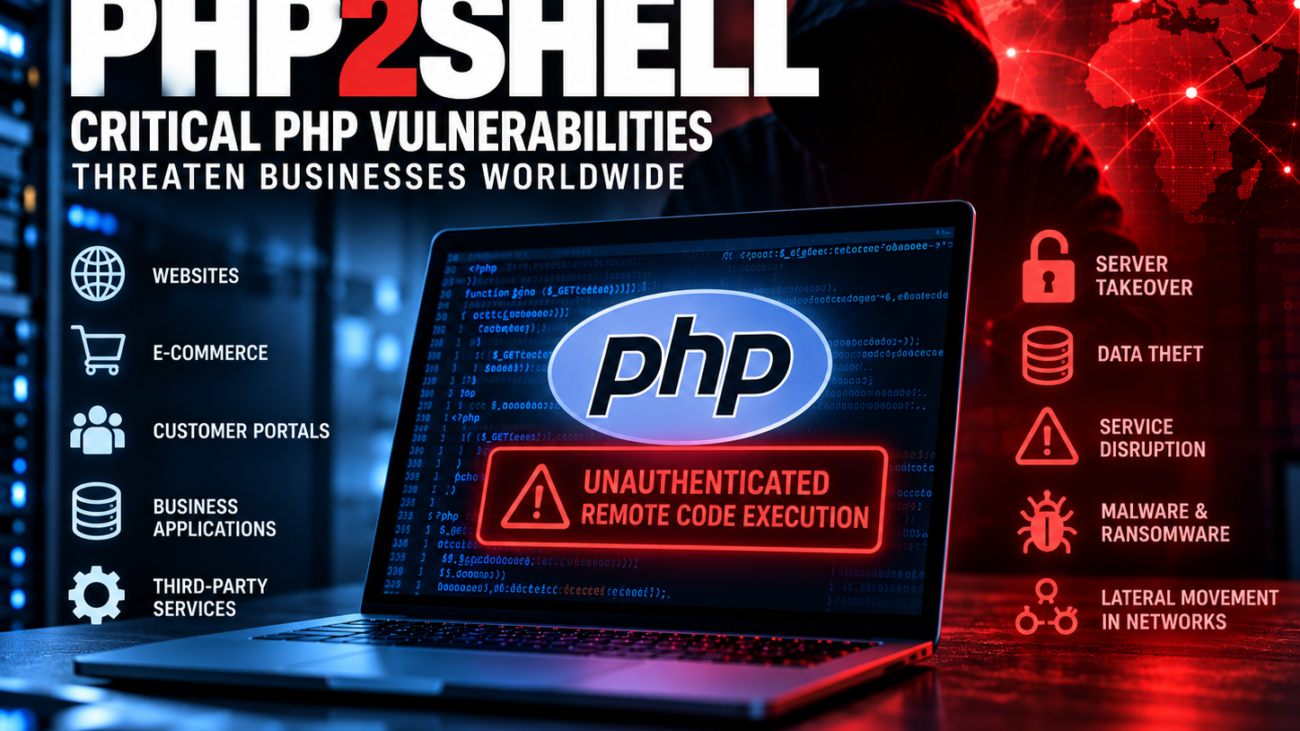
A critical cybersecurity threat known as PHP2Shell has prompted an urgent warning from the National Security Agency (NSA), raising concerns about the security of millions of websites and business applications worldwide. Two newly disclosed vulnerabilities in PHP, one of the internet’s most widely used programming languages, could allow cybercriminals to take control of vulnerable web servers without requiring a username, password, or prior access.

On October 21, 2026, PHP developers released emergency security patches to address these vulnerabilities. However, businesses that have not updated their systems may remain exposed to potentially devastating cyberattacks.

The NSA has urged organizations to immediately identify vulnerable systems, apply available patches, and increase security monitoring. For businesses that depend on websites, customer portals, and online applications, PHP2Shell represents a serious and immediate cybersecurity risk.

What Is PHP2Shell, and Why Is It Dangerous?

PHP, short for PHP: Hypertext Preprocessor, is a programming language that powers many websites and web applications, including platforms such as WordPress, Drupal, and numerous custom business systems.

PHP2Shell refers to two critical vulnerabilities, CVE-2026-109618 and CVE-2026-109619, both assigned a CVSS severity score of 9.2 out of 10.

These vulnerabilities affect PHP itself rather than a particular website plugin or application. Successful exploitation could allow an attacker to execute malicious commands on a vulnerable server without authentication.

This is especially dangerous because attackers may bypass application-level security controls and gain access to the underlying server environment.

Once inside, cybercriminals could steal confidential information, modify website content, install malware, disrupt services, or attempt to access other systems connected to the compromised server.

What Systems and Businesses Are Affected?

PHP is widely used across healthcare, financial services, education, retail, government, and professional services.

Potentially affected systems include:

  • WordPress, Drupal, and other PHP-powered websites.
  • E-commerce platforms and online payment applications.
  • Customer and patient portals.
  • Business management applications and administrative dashboards.
  • Web-based APIs and custom applications.
  • Third-party software and hosting environments that depend on PHP.

Businesses using Apache, PHP-FPM, and other PHP deployment environments should verify whether their installations are vulnerable.

Importantly, updating a website’s plugins does not necessarily resolve PHP2Shell. The vulnerabilities exist within the PHP runtime, meaning the underlying software must be patched.

Organizations relying on outside hosting companies or software vendors should request confirmation that the appropriate security updates have been installed.

How Serious Is the PHP2Shell Threat?

The potential consequences are significant.

A successful attack could expose customer information, financial records, login credentials, and sensitive business data. Attackers could also deploy ransomware, interrupt online services, or use a compromised server to move deeper into an organization’s network.

For healthcare organizations, this could threaten protected patient information. Financial institutions could face exposure of confidential records, while retailers and professional service providers could experience operational disruptions and reputational damage.

The situation is particularly concerning because publicly available exploit techniques could enable attackers to automate attacks against vulnerable internet-facing systems.

Security reporting has also identified exploitation attempts occurring before the public disclosure of the vulnerabilities.

According to Reuters, some government websites were temporarily taken offline as organizations worked to protect vulnerable infrastructure.

Although the total number of compromised systems and financial losses remains uncertain, the combination of widespread PHP adoption, critical vulnerability severity, and reported exploitation attempts makes PHP2Shell an urgent cybersecurity concern.

What Is the Resolution?

The PHP development team released emergency patches on October 21, 2026.

Organizations should update to the appropriate fixed versions:

PHP VersionMinimum Patched Release
PHP 8.58.5.12
PHP 8.48.4.27
PHP 8.38.3.36
PHP 8.28.2.35

Businesses running older, unsupported PHP versions should migrate to supported releases or obtain verified vendor-supported security updates.

The NSA also recommends temporarily disconnecting vulnerable systems from the internet when immediate patching is not possible and adequate mitigation cannot be implemented.

However, patching alone may not be sufficient if attackers have already compromised a system. Organizations should investigate suspicious activity and verify that unauthorized access has not occurred.

Six Steps Businesses Should Take Immediately

1. Identify vulnerable systems. Conduct an inventory of websites, servers, applications, and third-party services that depend on PHP. Determine which versions are running and whether they are exposed to the internet.

2. Apply emergency patches. Install the latest security updates and confirm that the correct patched versions are running. Request written verification from hosting providers and technology vendors.

3. Conduct vulnerability scanning and penetration testing. Identify exposed systems and evaluate whether attackers could exploit remaining weaknesses. Penetration testing can also reveal security gaps that might allow attackers to access sensitive data or move through internal networks.

4. Increase cybersecurity monitoring. Review web server logs, application activity, unusual network connections, and unauthorized file changes. Enable enhanced logging and security alerts to detect potential exploitation attempts.

5. Isolate systems that cannot be patched. Temporarily remove vulnerable services from internet access when adequate protection cannot be established. Replace unsupported systems that cannot receive security updates.

6. Investigate potential compromises. If suspicious activity is identified, initiate an incident response investigation. Review affected systems, preserve evidence, rotate compromised credentials, and determine whether sensitive information was accessed.

Why Small Businesses Should Pay Attention

Many small and medium-sized businesses depend on third-party web developers, hosting companies, and IT providers to maintain their technology infrastructure.

Unfortunately, business owners may not know which PHP versions their websites use or whether security patches are being applied.

A website can appear to function normally while remaining vulnerable to attack.

PHP2Shell reinforces the importance of proactive cybersecurity practices, including vulnerability management, regular penetration testing, managed IT services, and documented incident response procedures.

Cybersecurity is not simply about keeping technology operational. It is about protecting the information, systems, and customer relationships that businesses depend upon.

How Firma IT Solutions Can Help

At Firma IT Solutions & Services, we help businesses identify cybersecurity vulnerabilities before attackers can exploit them.

Our penetration testing and managed IT services help organizations evaluate internet-facing infrastructure, identify weaknesses, prioritize security improvements, and strengthen their overall cybersecurity posture.

PHP2Shell demonstrates why businesses cannot afford to wait until a breach occurs before addressing cybersecurity risks.

The most important question is not whether your business uses PHP. It is whether someone has verified that your systems are protected.

Protect your business before cybercriminals find an opportunity.

Firma IT Solutions & Services — Keeps You Connected and Protected.

Website: www.firmaitss.com
Phone: 303-209-0386
Email: admin@firmaitss.com

October-2026-Patch-Tuesday-Alert

Microsoft October 2026 Patch Tuesday: Record 1,400+ Vulnerabilities

This article provides important information about Microsoft’s October 2026 Patch Tuesday updates.

Microsoft October 2026 Patch Tuesday: Record 1,400+ Vulnerabilities

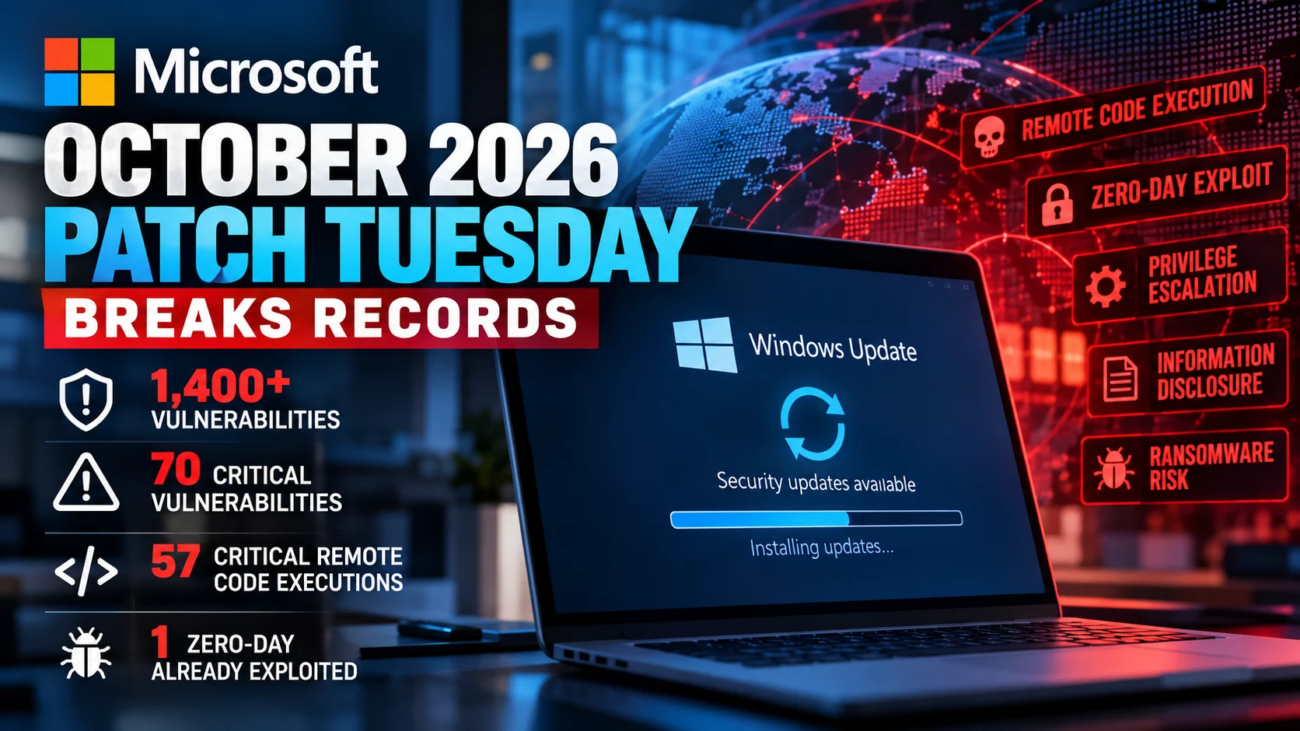
Microsoft October 2026 Patch Tuesday brought a record number of security fixes, giving businesses plenty of reasons to review their defenses. The October 13 release addressed more than 1,400 flaws across Microsoft products. For companies that rely on Windows, Office, SharePoint, and SQL Server, these updates deserve prompt attention.

BleepingComputer counted 1,411 vulnerabilities, including 70 with a Critical rating. Of those Critical flaws, 57 could allow attackers to run harmful code on affected systems. Attackers had already begun exploiting one vulnerability before Microsoft released a fix. Although totals vary by counting method, the scale of this release stands out. BleepingComputer’s report

For business leaders, this release raises a practical question: how quickly can your team identify affected systems and safely update them? Answering that question takes more than turning on automatic updates. It requires a clear device inventory, regular checks, and someone responsible for following up when installations fail.

Understanding the Security Risks

The flaws in October’s release create several paths for attackers. BleepingComputer reported 677 elevation of privilege flaws, 317 remote code execution flaws, and 254 information disclosure flaws. Its count also included 73 denial-of-service flaws, 40 security feature bypass flaws, and 28 spoofing flaws. Each category presents a different risk, from stolen data to lost access to essential services. View the vulnerability breakdown

Remote code execution, often called RCE, can let attackers run harmful instructions on a vulnerable system. Depending on the flaw, an attack might begin with a network request, a harmful document, or another entry point. A successful attack could help criminals install ransomware, steal files, or interrupt daily work.

Consider a medical practice that suddenly loses access to patient records. A similar attack could prevent a law firm from opening case files or meeting a deadline. In either situation, the damage could extend beyond the affected computer. Lost revenue, recovery costs, and damaged client trust can follow.

Elevation of privilege flaws create a different problem. An attacker may gain initial access through an employee’s account and then exploit another flaw to obtain greater control. That access could help the attacker disable security tools, read restricted files, or reach other systems. Limiting account permissions helps reduce this risk, while patching closes known software weaknesses.

Information disclosure flaws can expose private data or reveal details about a system. Even when a flaw does not directly expose client records, it may give attackers useful clues. Those clues can help them plan further attacks against the business. For firms that handle health, legal, or financial records, protecting this information remains a key responsibility.

An Actively Exploited Windows Flaw Adds Urgency

Among October’s fixes, CVE-2026-96951 deserves close attention. The Zero Day Initiative identified this Windows Shell security feature bypass flaw as actively exploited. Its analysis connects the vulnerability to bypassing Mark of the Web protections. Zero Day Initiative’s review

Mark of the Web helps Windows identify files from sources such as internet downloads. Windows uses that information to support security checks and warnings. When attackers bypass those protections, users may face harmful files without the warnings they would normally expect.

This case shows why severity ratings should not be the only factor in patching decisions. A flaw that attackers already use may demand faster action than one with a higher technical score. Businesses should identify affected devices, review Microsoft’s guidance, and test and deploy the relevant updates promptly.

Why Connected Business Networks Face Wider Risk

The Microsoft October 2026 Patch Tuesday release affects products that support everyday business operations. Windows computers, Office applications, SharePoint sites, and SQL Server databases often work together. A weakness in one part of that environment can create risks elsewhere.

The Zero Day Initiative also identified 59 flaws that fit its definition of “wormable.” Such flaws could support attacks that spread without a user signing in or taking action. That finding does not mean worms already exploit these vulnerabilities. However, it highlights why businesses should review exposed services and connected systems carefully. Read the researchers’ analysis

Attackers may combine software flaws with stolen passwords and unsafe settings to expand their reach. As a result, businesses need several layers of protection. Regular updates, limited access, monitoring, and security testing each help address a different part of the risk.

Windows 11 Users Also Face a Support Deadline

October brought another important change for some Windows users. Windows 11 version 24H2 Home and Pro reached the end of updates on October 13, 2026. Businesses still running these editions should move to a supported release. Enterprise and Education editions follow different support schedules, so checking the exact edition matters. Microsoft’s Windows release information

A device inventory provides a useful starting point. Review each computer’s Windows version and edition, then identify which devices need an upgrade. Before making changes, test the software your staff depends on. This helps your team plan the work around business needs and limit downtime.

Turning October’s Updates Into a Practical Action Plan

The first step is to match the October updates to the systems your business uses. Give prompt attention to actively exploited flaws, servers that face the internet, and systems that handle sensitive data. Testing can help catch compatibility problems, but the process also needs clear deadlines and follow-through.

Next, confirm that updates actually installed. Automatic updates can fail, and some devices remain offline for long periods. Others need a restart before a patch takes effect. A central patch management tool can help your team find missed updates and track devices that still need attention.

Account access also deserves review. Employees should have the permissions their jobs require, and administrator rights should have a clear business purpose. Remove unused accounts, review remote access tools, and use multifactor authentication to help protect sign-ins. These steps help limit what an attacker can do after gaining access.

Security testing provides another layer of insight. Updates fix known software flaws, but they do not resolve every weak password, exposed service, or unsafe setting. A vulnerability assessment helps identify known weaknesses. Penetration testing examines how attackers might exploit gaps in your defenses. The findings should lead to clear priorities, assigned owners, and checks that confirm each fix works.

Finally, review your response and recovery plans. Test whether your team can restore key files and systems from backups. Make sure employees know how to report suspicious activity and who will coordinate the response. Clear roles can reduce confusion when an incident disrupts normal work.

What This Means for Small and Medium-Sized Businesses

Small businesses use many of the same Microsoft products as large companies, but they often have fewer IT resources. A law firm with 20 employees still needs secure access to client files. A medical practice with 50 workstations still needs reliable systems to support patient care.

For these businesses, a long outage can place immediate pressure on staff, revenue, and client relationships. Recovery may also require outside help and time away from daily work. A consistent security routine helps reduce that exposure.

That routine should fit the size and needs of the business. Keep track of devices, review updates, limit access, and test backups. When internal staff lack the time or skills to manage these tasks, outside IT support can help maintain steady oversight.

How Firma IT Solutions Helps Businesses Stay Protected

At Firma IT Solutions & Services, Inc., we help businesses find security weaknesses and take practical steps to address them. Our cybersecurity and managed IT services include penetration testing, vulnerability identification, patch management, endpoint management, and ongoing IT support.

Our internal and external penetration tests examine weaknesses that attackers might exploit. We provide technical findings for IT teams and clear reports for business leaders. These reports help connect security issues to business risks, giving your team a stronger basis for deciding what to fix first.

We also help businesses manage updates and improve their daily IT practices. Keeping systems protected requires regular attention, clear ownership, and checks that confirm the work is complete. Those habits support a more reliable technology environment.

Build Security Into Everyday Business Operations

Microsoft October 2026 Patch Tuesday shows why security needs a place in routine business planning. Installing updates is an essential first step, followed by checks that confirm devices received the fixes. Access reviews, threat monitoring, backup testing, and regular security assessments help address the remaining gaps.

Businesses can make this work more manageable by assigning clear responsibilities and setting a regular schedule. Over time, consistent attention helps teams find problems earlier and respond with greater confidence.

At Firma IT Solutions, we believe: If It’s Untested, It’s Unprotected.

Protect Your Business With Firma IT Solutions

Knowing that updates exist is only part of protecting your business. You also need to know which devices remain exposed and whether your security controls work as expected. Firma IT Solutions & Services helps businesses answer those questions through practical testing and ongoing IT support.

Whether you need penetration testing, help managing updates, or broader managed IT services, our team can help you plan your next steps. Contact Firma IT Solutions today to discuss your business’s security needs.

Firma IT Solutions & Services, Inc.
Phone: 303-209-0386
Email: newbiz@firmaitss.com
Website: www.firmaitss.com

Keeps You Connected and Protected.

If It’s Untested, It’s Unprotected.

computer

Apple Just Released iOS 27 and macOS 27: Why You Should Update Now

Apple released its newest operating systems on September 14, 2026, including iOS 27, iPadOS 27, macOS 27 Golden Gate, watchOS 27, and tvOS 27. While many people will update because of new features, there is another major reason businesses and consumers should pay attention: cybersecurity.

Apple addressed an unusually large number of security vulnerabilities in this release cycle. iOS 27 and iPadOS 27 address approximately 126 unique CVEs, while macOS 27 Golden Gate addresses approximately 210 vulnerabilities. Apple also released iOS 26.7 and macOS Tahoe 26.7 for users who are not immediately moving to the newest major operating system.

From a cybersecurity perspective, this is not an update that should simply be ignored.

Why Upgrade to iOS 27?

iOS 27 is compatible with the iPhone 11 and newer, including the iPhone SE 2nd and 3rd generations. However, not every iOS 27 feature works on every compatible iPhone. The most advanced Apple Intelligence and Siri AI capabilities require newer hardware, including the iPhone 15 Pro and Pro Max and newer supported models.

Beyond security, these are five of the biggest iOS 27 features getting attention:

  1. Siri AI and the new Apple Intelligence experience. Siri has received a major redesign with better conversational abilities, personal-context awareness, onscreen awareness, and the ability to perform actions across applications. Siri can help locate information in messages, email, photos, and other areas of your device. Apple has also introduced Write with Siri and deeper Visual Intelligence capabilities. 
  2. Major improvements to Photos. Apple Intelligence introduces Spatial Reframing, an Extend tool that can intelligently expand images beyond their original borders, and an upgraded Clean Up feature for removing unwanted objects more naturally. 
  3. A smarter Safari browser. Safari can automatically organize tabs by topic, monitor websites for changes such as product availability or price changes, and even create certain customized extensions based on natural-language descriptions. 
  4. Better performance and connectivity. Apple says iOS 27 improves app-launch performance, photo loading, AirDrop transfers, search, and transitions between Wi-Fi and cellular networks. These improvements may be particularly noticeable on older supported devices. 
  5. Improved Screen Time and child-safety controls. New features include Ask to Browse, stronger Communication Safety protections, app Time Allowances, scheduling controls, and redesigned Screen Time settings. 

There are also smaller improvements, including independent alarm and timer volume settings, improved iCloud Shared Albums, new AirPods audio controls, and refinements to Apple’s Liquid Glass interface.

The Cybersecurity Reason to Update

The biggest reason Firma IT Solutions recommends keeping operating systems current is security.

Apple’s iOS 27 security advisory identifies more than 120 vulnerabilities across components including Bluetooth, CoreMedia, the kernel, authentication services, WebKit, Wi-Fi, Siri, Shortcuts, and networking.

Apple does not assign every vulnerability a simple “critical” rating, but several have particularly serious potential impact.

One example is CVE-2026-84607, which affected the AVEVideoEncoder component. Apple says a sandboxed application could potentially execute arbitrary code with kernel privileges. Kernel-level vulnerabilities are particularly serious because the kernel operates at one of the most privileged levels of the operating system.

Another significant issue, CVE-2026-65414, affected Bluetooth. Apple says a remote attacker could potentially cause application termination or arbitrary code execution.

A CoreMedia vulnerability, CVE-2026-64752, could allow a maliciously crafted image to result in arbitrary code execution. The issue was significant enough that Apple addressed it by removing the vulnerable code. 

Apple also corrected CVE-2026-65329, a networking vulnerability that could allow an attacker in a privileged network position to bypass IPsec authentication and potentially intercept network traffic.

Finally, CVE-2026-84523 affected Apple’s APFS file system. Apple says an application could potentially cause system termination or write to kernel memory.

Apple has not indicated that these particular iOS 27 vulnerabilities were being actively exploited when the update was released. Nevertheless, once vulnerabilities and patches become public, attackers have additional information they can use to investigate systems that remain unpatched.

What About iOS 26.7?

Apple released iOS 26.7 at the same time as iOS 27. It addresses approximately 82 unique CVEs.

An important clarification: on the iPhone, iOS 26.7 is not simply for devices incapable of running iOS 27. Both releases support the iPhone 11 and newer. Apple is allowing users to remain on iOS 26 temporarily while still receiving an important security update. However, iOS 27 includes additional security fixes that are not included in iOS 26.7. 

For businesses, that means remaining on iOS 26.7 may make sense temporarily while confirming application compatibility, but it should not be interpreted as identical security coverage.

Which Devices Cannot Upgrade?

For iPhones, iPhone XS, iPhone XS Max, iPhone XR, iPhone X, iPhone 8, and earlier generations cannot install iOS 27. The supported lineup begins with the iPhone 11 and iPhone SE 2nd generation.

Some older iPads can install iPadOS 26.7 but cannot install iPadOS 27. The cutoff for iPadOS 27 is iPad Pro 12.9-inch 4th generation, iPad Pro 11-inch 2nd generation, iPad Air 4th generation, standard iPad 9th generation, and iPad mini 6th generation or newer.

The situation is even more significant for Mac users.

macOS 27 Golden Gate supports Apple-silicon Macs only. Intel-based Macs cannot install macOS 27. Apple states that any Mac using an M-series or supported A-series Apple chip can upgrade.

Several of the final Intel Macs can still run macOS Tahoe 26.7, including the 2019 16-inch MacBook Pro, certain 2020 Intel MacBook Pros, the 2020 27-inch iMac, and the 2019 Mac Pro.

Apple is continuing to release security updates for older macOS versions, but organizations should not assume that means exactly three additional years of complete security coverage. Apple specifically warns that not all known security issues are necessarily addressed in previous versions of its operating systems.

What Businesses Should Do Now

Whether your organization uses Macs, iPhones, or iPads, operating-system updates should be part of your cybersecurity program—not something left entirely to individual employees.

Organizations should inventory their Apple devices, identify which systems can upgrade to the newest operating systems, install available security updates, and develop replacement plans for hardware approaching the end of operating-system support.

Software updates close vulnerabilities that Apple already knows about. Penetration Testing answers a different question: What vulnerabilities still exist in your environment that attackers could actually exploit?

Firma IT Solutions provides professional Penetration Testing and Managed IT Services to help organizations identify weaknesses, reduce cybersecurity risk, and keep systems secure.

If it’s untested, it’s unprotected.

For information about Penetration Testing or Managed IT Services, contact Firma IT Solutions at 303-209-0386 or visit firmaitss.com.

Firma IT Solutions — Keeps You Connected and Protected.

Designer (1)

America’s Water Systems Are Under Attack. Are We Paying Attention?

For years, cybersecurity professionals have warned that critical infrastructure would become a primary target for cybercriminals and nation-state actors. Unfortunately, we are now watching that prediction play out in real time.

In recent days, federal authorities reported cyberattacks targeting municipal water and wastewater systems across at least seven U.S. states. Some utilities were forced into manual operations, and more than 30 community water systems in Minnesota alone were reportedly affected. Federal agencies have warned that these attacks have the potential to disrupt water operations and threaten critical public services. [nbcnews.com], [cbsnews.com]

While no widespread contamination has been reported, the message is clear: America’s water infrastructure remains a high-value target.

Why These Attacks Matter

When people think about cyberattacks, they often picture stolen data, ransomware demands, or financial losses. Critical infrastructure attacks are different.

Water treatment plants control systems that directly impact public health and safety. If attackers gain access to operational technology (OT), industrial control systems (ICS), or SCADA environments, they can potentially manipulate processes that regulate water pressure, chemical treatment, and distribution operations. Federal and state authorities have warned that disruptions to water system operations can create serious risks for communities. [techtimes.com], [nbcnews.com]

The consequences can include:

  • Service outages
  • Boil-water advisories
  • Emergency manual operations
  • Environmental impacts
  • Loss of public trust
  • Significant financial and regulatory costs

In many cases, operators have been able to intervene before severe damage occurred. However, the fact that attackers continue to gain access demonstrates an uncomfortable reality: many critical infrastructure organizations still have exploitable weaknesses. [wisdiam.com], [thehill.com]

A Dangerous Trend Is Emerging

What concerns me most is not a single attack. It is the pattern.

Over the last several years, we have seen repeated attempts to target water facilities, energy providers, pipelines, healthcare organizations, and municipal governments. In many cases, attackers are not relying on sophisticated zero-day exploits. They are finding internet-exposed systems, weak credentials, poorly segmented networks, and unpatched devices. [thehill.com], [wisdiam.com]

That should be a wake-up call.

Many organizations assume that because they have firewalls, antivirus software, or compliance requirements in place, they are adequately protected. Unfortunately, cybercriminals do not attack based on what organizations think is secure. They attack based on what is actually vulnerable.

The recent wave of water system attacks highlights just how attractive critical infrastructure has become. Whether the motivation is disruption, political influence, espionage, or preparation for future conflicts, the outcome is the same: organizations must assume they are potential targets.

The Critical Role of Penetration Testing

This is where penetration testing becomes one of the most valuable investments an organization can make.

A penetration test goes beyond automated vulnerability scanning. It simulates the tactics, techniques, and procedures that real-world attackers use to gain access to systems.

The goal is simple:

Find the weaknesses before the bad guys do.

For critical infrastructure organizations, penetration testing can help identify:

  • Internet-facing vulnerabilities
  • Weak authentication controls
  • Misconfigured firewalls
  • Insecure remote access solutions
  • Network segmentation failures
  • Privilege escalation paths
  • Vulnerabilities that expose operational technology environments

Most importantly, penetration testing provides leadership with a realistic understanding of risk rather than assumptions about security.

When an attacker discovers a weakness first, the organization pays the price.

When a penetration tester discovers it first, the organization has the opportunity to fix it.

Why Penetration Testing Should Be Part of Every Security Strategy

Cybersecurity is no longer just an IT issue. It is an operational issue, a business issue, and in the case of water systems, a public safety issue.

Organizations responsible for critical infrastructure should not wait for a federal warning, a breach notification, or a headline-making incident before evaluating their defenses.

Security assessments, vulnerability management, employee awareness training, incident response planning, and penetration testing should all work together as part of a comprehensive cybersecurity program.

The organizations that fare best during cyber incidents are usually the ones that identify and address weaknesses before attackers have the opportunity to exploit them.

How Firma IT Solutions Can Help

At Firma IT Solutions, penetration testing is more than checking a compliance box. Our approach is designed to think like an attacker, identify real-world risks, and provide organizations with actionable recommendations that strengthen security.

We help organizations uncover vulnerabilities across external networks, web applications, cloud environments, and internal infrastructure before those weaknesses become headlines.

The recent attacks against water systems across the United States should serve as a reminder that critical infrastructure remains under constant threat. The question is not whether attackers are looking for vulnerabilities. They are.

The question is whether your organization will find them first.

If your organization has not conducted a recent penetration test, now is the time to make it a priority. Your security strategy should not begin after an attack. It should begin long before one occurs.

Firma IT Solutions helps organizations identify weaknesses before attackers do. Contact us today to learn how our penetration testing services can help strengthen your cybersecurity posture and reduce risk.

ChatGPT Image Jul 21, 2026, 01_39_15 PM

The Ernst & Young Cyberattack: Why Third-Party Risk Demands Penetration Testing

Another major organization has learned a difficult lesson: a company can have strong internal security controls and still become the victim of a breach through a trusted third-party platform. The recent Ernst & Young data breach highlights the risks associated with such third-party vulnerabilities.

Ernst & Young LLP, better known as EY, recently began notifying clients that sensitive personal and financial information was stolen from a third-party information technology service management platform. EY used the platform to support employees performing tax-related work, and support tickets sometimes included documents containing client tax information.

According to EY’s breach notice, an unauthorized party accessed the platform between March 28 and April 12, 2026, and downloaded documents belonging to multiple clients. EY detected unusual activity on April 23, launched an investigation, secured the environment, brought in outside cybersecurity professionals, and notified federal law enforcement.

How Did the Attackers Get In?

EY has not publicly disclosed the initial attack method, the identity of the platform provider, or the attacker responsible. Therefore, it would be irresponsible to guess whether the breach began with stolen credentials, social engineering, an application vulnerability, a misconfiguration, or another technique.

What we do know is that attackers gained unauthorized access to a trusted platform and downloaded sensitive client documents.

That is the danger of third-party risk.

Attackers do not always have to break through your firewall. Sometimes they enter through a vendor, cloud platform, support system, software integration, or trusted account.

What Information Was Compromised?

The stolen documents contained personal and financial information used to prepare tax filings. Reported data included names, addresses, Social Security numbers, financial account numbers, credit or debit card numbers, and other tax-related information. EY has not publicly disclosed the total number of affected clients and has said it is not aware of misuse or additional exposure.

However, the absence of known misuse today does not mean the information has no value to criminals.

Tax records can give an attacker enough information to build a detailed profile of a victim. Criminals may use that data for identity theft, fraudulent tax filings, account takeover, targeted phishing, business email compromise, or convincing social engineering attacks.

Unlike a password, a Social Security number cannot simply be reset. Once this information leaves a protected environment, the risk can follow the victim for years.

A Third-Party Breach Is Still Your Breach

The EY incident reinforces a truth every organization must understand:

Outsourcing a service does not outsource the risk.

We saw a similar lesson during the Canvas cyberattack earlier this year. Canvas is operated by Instructure and used by schools and universities as a trusted learning platform. From the institution’s perspective, Canvas is a third-party vendor holding and processing its data.

Instructure reported that the attacker created a Free-for-Teacher account and submitted a support ticket containing malicious code. When a support representative opened the ticket, the code exploited a cross-site scripting vulnerability, allowed the attacker to obtain an authorization token, and provided elevated access. Information involved included usernames, email addresses, course names, enrollment information, and messages.

The schools did not create the Canvas vulnerability. However, their students, employees, operations, and reputations were still affected.

Your vendor may suffer the initial compromise, but your organization may still face disruption, notification obligations, loss of trust, legal exposure, and difficult questions from stakeholders.

Why Your Organization Still Needs a Penetration Test

Some leaders may believe a penetration test is unnecessary when a breach originated with a vendor.

That is the wrong conclusion.

A penetration test cannot guarantee that a third party will never be breached. However, it can determine whether a compromised vendor account, stolen token, exposed API, weak integration, or trusted connection could be used to attack your environment.

After a third-party incident, your organization should test its own defenses.

Can an attacker reuse vendor credentials? Are service accounts protected by multifactor authentication? Do integrations have more access than they need? Can a compromised account move laterally? Are sensitive systems properly segmented? Would your security tools detect unusual access or large data transfers?

Policies and automated scans cannot fully answer these questions. A professional penetration test safely simulates how a real attacker could take advantage of the trust relationships surrounding your organization.

Why Firma IT Solutions Is the Best Fit

Firma IT Solutions does not treat penetration testing as a compliance checkbox. We approach each engagement from the perspective of a real attacker while protecting the client’s operations and business continuity.

With more than 20 years of information technology and cybersecurity experience, certified ethical hacking expertise, and real-world incident response experience, Firma IT Solutions understands how technical weaknesses become business emergencies.

Our clients receive more than a list of vulnerabilities. We provide clear evidence, practical remediation guidance, technical reporting for IT teams, executive-level reporting for leadership, and a debrief that explains what the findings mean.

We can also evaluate risks created by remote access, cloud services, vendor connections, identity systems, APIs, and other third-party relationships.

The lesson from EY and Canvas is clear: you do not have to be directly attacked to become the victim of a cyberattack.

Your vendors are part of your attack surface. Your integrations are part of your attack surface. Every trusted connection must be tested.

The best time to find out how far an attacker could go is before a third-party breach gives them the opportunity.

Contact Firma IT Solutions at 303-209-0386 to schedule a professional penetration test and learn where your organization may be exposed.

Designer (6)

CMMC Phase II Requirements Suspended

CMMC Isn’t Dead. But the Rules Just Changed.

For years, I’ve been telling business leaders that cybersecurity isn’t optional if you’re doing business with the federal government. In light of the recent CMMC Phase II Requirement Suspended announcement, it’s more important than ever to stay informed. Whether you’re a prime contractor or a subcontractor, protecting sensitive government information isn’t just a best practice—it’s a requirement.

That’s why the Department of War’s announcement on July 13, 2026, caught the attention of the entire Defense Industrial Base. The department suspended the implementation of CMMC Phase II requirements and launched a comprehensive review of the Cybersecurity Maturity Model Certification (CMMC) program. Before anyone starts celebrating or assumes cybersecurity requirements have disappeared, let’s talk about what actually happened and what it means for organizations that want to continue doing business with the federal government.

What Happened?

The Department of War announced the immediate suspension of CMMC Phase II requirements, which were scheduled to become effective on November 10, 2026. At the same time, it created a CMMC Review and Reform Task Force to examine the program and recommend changes. The stated goal is to reduce barriers to entry for small, medium-sized, and non-traditional defense contractors while maintaining an acceptable cybersecurity baseline.

This decision does not eliminate CMMC altogether. It pauses the next phase of implementation while leadership reevaluates how cybersecurity compliance is validated throughout the defense supply chain.

What Changed?

The biggest change is that organizations that were preparing for mandatory Phase II certification requirements now find themselves in a holding pattern.

Under the original roadmap, many contractors handling Controlled Unclassified Information (CUI) would eventually need third-party assessments and certifications to demonstrate compliance. That implementation has now been suspended pending review. The department has indicated it wants to identify ways to reduce compliance complexity and lower the cost of participation for defense contractors.

In simple terms, the government hit the pause button on additional certification requirements—not on cybersecurity itself.

What Remains in Effect?

This is the part many businesses are overlooking.

The cybersecurity requirements have not gone away.

Phase I self-assessment requirements remain in force. Contractors are still expected to safeguard Federal Contract Information (FCI) and Controlled Unclassified Information (CUI). Organizations handling CUI are still expected to comply with NIST SP 800-171 requirements, and the government can still validate cybersecurity compliance through self-assessments and selected government-led reviews. Existing DFARS cybersecurity obligations also remain unchanged.

If your organization stopped investing in cybersecurity because you heard “CMMC was suspended,” you’re misunderstanding the announcement.

Compliance verification may be changing. Cybersecurity expectations are not.

Why Did They Do It?

According to department leadership, the review is intended to reduce bureaucracy, accelerate acquisition timelines, and make it easier for smaller businesses to compete for federal contracts. Officials expressed concern that the cost and complexity of compliance could discourage innovative companies from participating in the defense supply chain.

I understand that concern.

Many small businesses struggle with the expense of assessments, policy development, security tools, documentation, and ongoing compliance management. For some organizations, the cost of certification has felt like a barrier to entry rather than a security improvement.

The challenge for the government is finding the right balance between accessibility and security.

What Does This Mean for Contractors?

My advice to contractors is simple: stay the course.

If you’ve been working toward NIST 800-171 compliance, continue. If you’ve invested in security controls, employee awareness training, vulnerability management, multi-factor authentication, endpoint security, and incident response capabilities, don’t stop now.

Organizations that pause their cybersecurity initiatives because certification requirements are under review may create significant risk for themselves. The government has made it clear that protecting federal information remains a non-negotiable requirement.

Contractors should continue:

  • Maintaining NIST 800-171 compliance efforts.
  • Performing required self-assessments.
  • Maintaining accurate SPRS reporting where applicable.
  • Improving documentation and security processes.
  • Preparing for future certification requirements that may emerge from the review.

The organizations that remain proactive will be in the best position regardless of what the final version of CMMC looks like.

What Does This Mean for Cybersecurity?

This is where things get interesting.

For years, one of the biggest criticisms of the defense supply chain has been that cybersecurity often relied on self-attestation rather than independent validation. CMMC was designed to address that concern by introducing varying levels of assessment and verification.

By suspending Phase II requirements, the government is signaling that it wants to rethink how cybersecurity assurance is measured while reducing unnecessary burden on contractors. Whether this ultimately strengthens or weakens cybersecurity will depend on what replaces the current approach.

What should not be lost in this discussion is the reality that nation-state adversaries, ransomware groups, and cybercriminals are not pausing their attacks while the government reviews CMMC. Sensitive data remains valuable. Supply chain attacks remain common. The threat landscape remains aggressive.

The organizations that view cybersecurity only as a compliance exercise will always struggle. The companies that view cybersecurity as a business imperative will continue protecting their customers, their reputation, and their federal contracts regardless of what acronym appears in the regulations.

Final Thoughts

CMMC is not dead. It’s being reexamined.

The Department of War has paused Phase II certification requirements, but the obligation to protect federal information remains fully intact. Contractors should not interpret this announcement as permission to slow down cybersecurity investments. In my opinion, the smartest organizations will continue building mature security programs, maintaining NIST 800-171 compliance, and preparing for whatever version of CMMC emerges from this review process.

Because at the end of the day, compliance may change. Threat actors won’t.

Designer (2)

The Breach Era We’re Living in

The Breach Era We’re Living In

We no longer live in a time when breaches show up as isolated incidents every few months. Today, organizations face a constant stream of attacks that move faster and reach deeper than most leaders expect. What we are seeing now is systemic, continuous, and scaling at a pace that forces a very different conversation. This reflects The Breach Era We’re Living In, where these threats have become the new normal.

Over the past few weeks alone, breaches have hit infrastructure, identity systems, SaaS platforms, biometrics, and even government environments. On the surface, each incident looks unique. However, when you step back and evaluate them through a practitioner’s lens, the pattern becomes clear. The issue is not that attackers have become unstoppable. The issue is that they are testing at a level most organizations never match.

In simple terms, organizations are not being outmatched. They are being out-tested.


Five Breaches, One Clear Pattern

Start with the Fortinet breach. Attackers compromised thousands of firewall devices and used valid credentials to gain entry into enterprise environments. Instead of causing immediate disruption, they moved quietly, working their way into authentication systems and building long-term access. This was not noise. It was control.

Now look at the massive credential dataset discovered shortly after. Attackers collected billions of usernames and passwords and tied them to live systems. Instead of storing that data for later use, they aligned it with active vulnerabilities and launched attacks in real time. That shift should get every leader’s attention, because it turns stolen data into immediate weaponization.

Then there is the Madison Square Garden breach, which exposed biometric data tied to millions of individuals. This changes the stakes entirely. When passwords are compromised, you reset them. When biometric data is exposed, that risk does not go away. It follows the individual indefinitely, and it introduces long-term legal and privacy implications.

The Klue breach tells another important story. By compromising a single SaaS platform, attackers gained access to multiple organizations. This is how modern attacks scale. Instead of targeting one company at a time, attackers target shared systems and trust relationships that connect entire ecosystems.

Finally, the Texas government breach reinforces something we have known for years but have not fully addressed. Third-party vendors remain one of the most reliable entry points. Attackers used a connected system to expose millions of sensitive records. That is not just a perimeter failure. That is a visibility problem across the extended environment.

Individually, each of these breaches is significant. Together, they tell us exactly where we are.


The Illusion of Security

Many organizations believe they are secure because they have invested in the right tools. Firewalls are configured. Endpoint protection is deployed. Multi-factor authentication is enabled. On paper, everything looks solid.

However, the breaches we are seeing today are not bypassing those controls. They are operating within them.

Attackers are logging in with valid credentials. They are leveraging trusted integrations. They are navigating systems that behave exactly as designed. From the system’s perspective, nothing looks wrong. That is exactly why these attacks succeed.

The real problem is not a lack of technology. The real problem is a lack of validation. Too many organizations assume their controls work, but they have never tested them under real-world conditions.


Where Organizations Fall Short

Most security programs focus on prevention and compliance. They check for proper configurations, confirm that controls exist, and ensure that systems meet requirements.

Attackers take a completely different approach.

They test whether stolen credentials give them access. They explore how far they can move once inside. They identify which systems hold valuable data and whether anyone will stop them.

If organizations are not asking those same questions, then they are leaving critical gaps behind. Those gaps do not stay hidden forever. An attacker will find them eventually.


Why Penetration Testing Changes the Equation

Penetration testing forces organizations to move from assumption to proof. It shows how systems behave under pressure and how an attack actually unfolds.

More importantly, it answers the question that matters most. If an attacker gets in today, what happens next?

In a scenario like the Fortinet breach, penetration testing simulates the use of valid credentials. It shows how easily an attacker can gain access and what systems become reachable once they do. It also reveals how far that access extends, whether into identity systems, privileged accounts, or sensitive data stores.

This is where penetration testing creates real value. It does not just identify isolated issues. It connects those issues into complete attack paths. It shows how a small weakness can lead to a major compromise when exploited in sequence.

That level of visibility is what most organizations are missing.


Testing the Modern Attack Surface

Today’s environments are highly connected. Organizations rely on SaaS platforms, APIs, and vendor integrations to operate at scale. These connections create efficiency, but they also create opportunity for attackers.

Penetration testing brings those connections into focus. It evaluates how systems interact, how data flows, and where trust exists between platforms. It tests whether those trust relationships can be abused in the same way attackers would attempt.

At the same time, penetration testing helps organizations understand what data truly matters. Not all data carries the same level of risk. Sensitive data such as healthcare records, financial information, or biometric identifiers requires stronger protection.

Understanding where that data lives and how it can be accessed is critical. Without that visibility, organizations cannot prioritize what they need to defend.


A Shift in Leadership Thinking

Leaders need to rethink how they define security readiness. The question is no longer whether controls are in place. The real question is whether those controls have been proven under pressure.

Security is not static. It requires continuous validation.

Attackers already operate this way. They test environments every day. They automate credential attacks, scan for weak configurations, and probe for trust relationships they can exploit.

If organizations are not testing at the same level, they will always be one step behind.

Penetration testing helps close that gap. It allows organizations to see their environment through an attacker’s lens and take action before a breach occurs.


Final Thought

Every breach we discussed points to the same underlying issue. Attackers succeed because organizations have not tested their environments in a way that reflects how real attacks happen.

That is the gap.

Penetration testing closes that gap by exposing weaknesses early and showing how attackers can move through an environment. It provides clarity, not guesswork.

At the end of the day, organizations do not rise to the occasion during a breach. They fall back on the level of testing they have done beforehand.

Right now, the organizations that are winning are the ones willing to test themselves before someone else does.

Designer (3)

The Fortinet Breach: A Wake-Up Call for How Modern Attacks Really Work

The Fortinet Breach: A Wake-Up Call for How Modern Attacks Really Work

By Rodney Gullatte Jr.

In this article, we take a closer look at the recent Fortinet Breach and its implications.

The recent Fortinet breach is more than another cybersecurity headline. It clearly shows that attacker behavior has changed, and many organizations still have not adjusted. At its core, this breach reveals a gap that leaders continue to overlook.

This situation is not about perimeter failure. Instead, it highlights validated access at global scale.


What Actually Happened

In June 2026, researchers uncovered a large-scale compromise involving Fortinet firewall devices. Attackers breached nearly 74,000 internet-facing systems across more than 21,000 organizations in 194 countries.

More importantly, the attackers did not just gain access. They captured plaintext credentials, which gave them immediate, usable entry into these environments.

From there, the attackers moved deeper into networks. They accessed centralized authentication systems like RADIUS servers and Microsoft Active Directory. As a result, they positioned themselves inside the identity layer of enterprise environments.

This was not a quick grab for data. Instead, attackers took a controlled and deliberate approach to gain long-term access.


Why This Breach Matters

This breach stands out because it changes how we think about risk.

First, the scale matters. The number of affected devices shows that this issue spans industries and borders. Healthcare, finance, government, and enterprise organizations all face the same exposure.

Second, this attack reinforces a shift that security leaders have warned about for years. Attackers no longer focus on breaking through defenses. Instead, they focus on logging in with legitimate credentials.

When attackers use valid credentials, systems treat them as trusted users. As a result, traditional defenses often fail to detect them.

Finally, the breach shows how attackers maintain persistence. Once inside authentication systems, they no longer operate at the edge. Instead, they become part of the environment itself, which makes detection much harder.


The Real Problem: Assumed Security

Many organizations believe they are secure because they have deployed the right tools. Firewalls are configured. Endpoint protection is active. Multi-factor authentication is enabled.

However, those controls create a false sense of confidence when organizations do not test them properly.

The Fortinet breach proves this point. The attackers used real credentials. The systems responded exactly as designed. Access worked as expected.

That is exactly why the attack succeeded.

Security teams did not fail to deploy controls. Instead, they failed to validate how those controls behave under real-world attack conditions.


Why Penetration Testing Matters Now

Penetration testing changes the conversation from assumptions to evidence. It forces organizations to see how their environment performs under pressure.

More importantly, it answers a critical question. If an attacker gains access today, what happens next?

In the Fortinet scenario, penetration testing could have exposed several key risks early. For example, it could have shown how easily valid credentials provide access to external systems. It also could have mapped how far an attacker could move once inside the network.

Additionally, penetration testing would show which systems and data become reachable after initial compromise.

These insights matter because they reflect exactly how attackers operate.

Penetration testing does more than identify individual weaknesses. It demonstrates how attackers chain those weaknesses together. It shows the real path from entry to impact.

In cases like this, where attackers moved into authentication systems, a strong penetration test reveals critical gaps. These gaps often include poor segmentation, excessive permissions, limited visibility, and weak detection controls around legitimate access.

As a result, organizations gain clarity into risks that traditional tools often miss.


A Shift in How Leaders Think About Security

The Fortinet breach should push every organization to rethink how it measures security.

Security does not come from the tools you deploy.
Security comes from what you have tested and proven.

At the same time, attackers already test environments every day. They search for weak credentials, misconfigurations, and trust relationships they can exploit. They use automation and scale to their advantage.

If organizations do not match that level of testing, they fall behind.

Penetration testing helps close that gap. It aligns defensive strategies with real attacker behavior. It gives organizations a clear view of how their environment appears to an adversary.


Final Thought

The Fortinet breach is not just a technical issue. It reflects a larger problem across the cybersecurity landscape. Too many organizations rely on assumptions instead of evidence.

Attackers do not assume. They test.

That leaves every organization with one simple question.

Are you doing the same?

Because in today’s environment, the organizations that test themselves thoroughly are the ones that can fix weaknesses before they turn into public incidents.

ChatGPT Image Jun 15, 2026, 10_17_32 PM

Virta Health Data Breach in Colorado: Why Healthcare Penetration Testing Is More Important Than Ever

Healthcare data breaches continue to reveal one hard truth: sensitive patient information has real value, and attackers know it. The recent Virta Health data breach reminds healthcare leaders that basic security tools, written policies, and good intentions do not provide enough protection on their own.

Today’s threat landscape requires healthcare organizations to test their defenses before attackers do.

Virta Health Corp. and Virta Medical, P.C., collectively referred to as Virta Health, reported a security incident involving a data repository that sat outside its current production platform. According to public notices, Virta Health identified unauthorized activity on March 24, 2026. Investigators determined that someone may have accessed certain files in the repository between March 19, 2026, and March 22, 2026.

The information involved was serious. Public notices state that the repository may have exposed names, Social Security numbers, Individual Tax Identification Numbers, dates of birth, health insurance information, medical diagnosis information, treatment information, facility information, service dates, medical record numbers, and other unique health identifiers.

That type of data is not just personal. It is deeply sensitive.

Unlike a stolen credit card, medical information cannot simply be canceled and replaced. A person’s diagnosis, treatment history, health identifiers, and Social Security number can follow them for years. Criminals can use this information for identity theft, medical fraud, phishing, extortion, and targeted scams. In some cases, victims may not discover the abuse until long after the breach.

For that reason, healthcare cybersecurity is not just an IT issue. It is a patient trust issue.

Why This Breach Matters to Colorado Healthcare Organizations

Virta Health has been described as a Denver, Colorado-based digital health provider focused on helping people manage type 2 diabetes, prediabetes, and obesity. Although the incident did not involve Virta’s current production platform, the separate repository still contained sensitive personal and health information.

That distinction matters.

Many organizations place most of their security focus on the main application, electronic health record system, or production environment. Meanwhile, attackers often search for systems that receive less attention. These systems may include old repositories, testing environments, backups, file shares, cloud storage buckets, reporting databases, vendor-accessible folders, or legacy systems that teams never fully retired.

In other words, the weakest point is often not the system everyone watches. It is the system everyone forgot about.

Healthcare organizations across Colorado should treat this breach as a warning. If sensitive data exists anywhere in the environment, the organization must protect it, monitor it, test it, and validate its security. Leaders cannot simply say, “That repository is separate from production.” If it contains patient data, it still creates risk.

Why Attackers Target Healthcare

Healthcare organizations attract attackers because they hold some of the most valuable data in the world. A single patient record can contain a full identity profile, including a name, date of birth, address, insurance details, Social Security number, medical history, and billing information.

Because of that, attackers can use healthcare data in many ways. They can sell it. They can use it for fraud. They can build convincing phishing attacks with it. They can also use it to pressure organizations during extortion attempts.

Healthcare environments also tend to be complex. Many organizations manage cloud platforms, remote workers, third-party vendors, patient portals, billing systems, medical devices, file repositories, and legacy applications. Every connection creates another possible attack path.

That is where penetration testing becomes critical.

What Penetration Testing Does

Penetration testing is a controlled, ethical security assessment that simulates how a real attacker would attempt to break into an organization’s systems. The goal is not to cause harm. The goal is to find weaknesses before criminals find them.

For healthcare organizations, penetration testing can help identify:

  • Weak or exposed remote access systems
  • Misconfigured cloud storage or repositories
  • Poor access controls
  • Weak passwords or missing multi-factor authentication
  • Vulnerable web applications
  • Unpatched systems
  • Over-permissioned user accounts
  • Lack of network segmentation
  • Poor logging and monitoring
  • Paths attackers could use to move from one system to another

Most importantly, penetration testing helps answer the question every healthcare leader should ask:

“If an attacker got in today, what could they access?”

A firewall dashboard cannot answer that question. A policy document cannot answer it either. Even a strong IT team cannot answer it through assumption alone.

The organization must test its defenses.

Why “Separate From Production” Is Not Enough

One key detail from the Virta Health notice is that the unauthorized activity involved a data repository separate from the current production platform. At first glance, that may sound reassuring. From a cybersecurity standpoint, however, separate does not always mean secure.

A separate repository can still contain sensitive data. It can still store user credentials. Cloud services may still connect to it. Employees or vendors may still access it. The repository may still contain misconfigurations, weak permissions, or exposed files. Security teams may also overlook it during routine reviews because it does not sit inside the main production environment.

Penetration testing helps uncover those blind spots.

A strong penetration test does not only look at the obvious front door. It also looks for side doors, forgotten doors, poorly locked doors, and doors no one realized were still open.

This matters even more in healthcare, where data often moves between systems for reporting, analytics, claims, care coordination, research, customer support, and operations.

Compliance Alone Is Not Protection

Many healthcare organizations believe HIPAA compliance means they are secure. Unfortunately, compliance and security are not the same thing.

Compliance helps establish required policies, safeguards, and responsibilities. Attackers, however, do not care whether a policy exists. They care whether they can exploit a weakness.

A healthcare organization may have policies that require access controls, encryption, monitoring, and vendor review. But unless the organization tests those controls, leadership may not know whether they actually work.

Penetration testing turns assumptions into evidence.

It shows which controls work, which controls fail, and which risks need immediate attention. It also gives executives and board members a clearer picture of real-world exposure.

The Business Impact of a Healthcare Breach

The cost of a healthcare data breach goes far beyond technical cleanup. Organizations may face legal fees, notification costs, credit monitoring expenses, regulatory scrutiny, operational disruption, reputational damage, and loss of trust.

For digital health companies, the reputational impact can be especially serious. Patients and sponsoring organizations must trust that the company handles sensitive health information responsibly. Once an organization loses that trust, rebuilding it can take years.

That is why proactive testing costs far less than reactive damage control.

A penetration test may reveal issues that feel uncomfortable. However, finding those issues privately is much better than discovering them after an attacker has already accessed sensitive data.

What Healthcare Leaders Should Do Now

The Virta Health breach should push healthcare leaders to review their own environments. Start with a few direct questions:

  • Where does our organization store sensitive patient data?
  • Do we include old repositories, backups, and test systems in security reviews?
  • Who has access to those systems?
  • Do we enforce multi-factor authentication everywhere?
  • Does our team regularly review cloud systems for misconfigurations?
  • Could attackers move laterally if they compromised one account?
  • Do we monitor logs for unusual access?
  • Has an independent penetration test evaluated our environment recently?

When leadership cannot answer these questions clearly, the organization has work to do.

Penetration Testing Protects Patient Trust

The lesson from the Virta Health data breach goes beyond one organization. Healthcare data needs protection everywhere it lives.

Production systems matter. Cloud repositories matter. Backups matter. Vendor access matters. Old databases matter. Test environments matter. Every system that stores or touches patient data can become a target.

Penetration testing helps healthcare organizations find and fix real security gaps before attackers exploit them. It gives leadership visibility. It helps IT teams prioritize risk. It supports compliance. Most importantly, it helps protect patients.

In healthcare, cybersecurity is not just about protecting systems.

It is about protecting people.

Contact Firma IT Solutions today at 303-209-0386 to learn how we can help keep your business connected and protected.

CLICK HERE TO REQUEST A PENETRATION TEST QUOTE FOR SERVICE