

Binance Cyberattack

The $6.34 Billion Binance Hack: How a Fake Job Interview and Internal AI Tool Enabled a Historic Cyberattack

The $6.34 Billion Binance Hack: How a Fake Job Interview and Internal AI Tool Enabled a Historic Cyberattack

On October 29, 2026, hackers stole approximately $6.34 billion in digital assets from Binance, the world’s largest cryptocurrency exchange. The $6.34 Billion Binance Hack shocked the cryptocurrency industry and raised serious concerns about modern cybersecurity. Investigators soon discovered that the attack involved much more than a weakness in cryptocurrency systems. Cybercriminals had spent months preparing their operation, using malicious software, a fake job interview, stolen credentials, and an internal artificial intelligence (AI) tool.

New findings released by Binance on November 3 revealed how the attackers combined social engineering with weaknesses in the company’s internal systems. The $6.34 Billion Binance Hack demonstrates how several security gaps can create a path to critical business infrastructure. Even organizations with substantial cybersecurity resources can suffer major losses when attackers exploit these weaknesses.

How a Fake Job Interview Enabled the $6.34 Billion Binance Hack

According to Binance’s initial investigation, the attackers began preparing months before the October breach. In June 2026, an engineer responsible for cryptocurrency wallets attempted to install a popular AI coding application. However, the employee unknowingly downloaded a malicious version found through an online search. Binance detected suspicious activity, replaced the computer, and reset the affected credentials. Unfortunately, the attackers had already gathered valuable information about the engineer’s responsibilities and professional relationships.

The attackers used that information to launch a more targeted campaign in September. Someone posing as a recruiter contacted another Binance engineer through a legitimate employment platform. The recruiter arranged what appeared to be a normal hiring process, including interviews with a human resources representative and the company’s supposed CEO. The interviewers used live video, convincing professional profiles, and personal photographs to establish trust. Their approach made the opportunity appear legitimate and reduced the employee’s suspicion.

Near the end of the second interview, the engineer received instructions to download a programming assignment from an online code repository. Software developers often complete similar assignments during job interviews, so the request appeared reasonable. However, the project contained malicious software designed to compromise the employee’s computer. When the engineer opened and initialized the project, the malware connected to a server controlled by the attackers. It also modified a legitimate development component to hide its activity. Binance’s endpoint protection tools initially failed to detect the unfamiliar malware, allowing the attackers to maintain access.

How Internal AI Infrastructure Contributed to the Binance Cyberattack

One of the most concerning findings from The $6.34 Billion Binance Hack involved the company’s internal artificial intelligence infrastructure. On October 20, attackers reportedly used the compromised workstation and an internal AI tool to reach two additional engineers. Both employees worked with Binance’s cryptocurrency wallet systems. During this activity, the attackers obtained a container deployment permission token, giving them another way to access sensitive infrastructure.

This discovery raises concerns for businesses that increasingly rely on AI-powered applications. Many organizations now use artificial intelligence to improve productivity, develop software, analyze information, and automate daily tasks. These tools often connect to internal databases, cloud services, and sensitive business systems. While these connections offer significant benefits, they can also create new security risks when organizations fail to control access.

The Binance incident does not suggest that an AI model independently carried out the attack. Instead, it shows how hackers can exploit access to AI tools during a larger breach. Organizations must carefully manage the permissions they grant these applications. They should also monitor AI activity and limit connections to sensitive systems. Businesses adopting artificial intelligence need to apply the same security standards they use for other critical technology.

How the Attackers Stole $6.34 Billion in Cryptocurrency

After gaining access to several engineering systems, the attackers obtained additional credentials and moved closer to Binance’s cryptocurrency wallets. On October 29, they used stolen credentials and a compromised workstation to deploy a malicious container. This allowed them to gain unauthorized access to an internal service responsible for approving cryptocurrency transfers.

Once the attackers controlled this service, they began transferring digital assets outside Binance’s normal withdrawal process. Within approximately four minutes, five Binance wallets transferred roughly 233 million XRP tokens to an attacker-controlled address. Additional transfers involved Bitcoin, Ethereum, Solana, and other cryptocurrencies. Investigators also found that the attackers abused Ethereum’s EIP-7702 authorization feature. This complicated Binance’s response because suspending customer withdrawals did not automatically cancel the malicious permissions.

Although the largest transfers occurred within minutes, the unauthorized activity continued for several hours. By the time Binance contained the breach, the attackers had stolen approximately $6.34 billion in cryptocurrency. The FBI attributed the attack to North Korean cybercriminals associated with TraderTraitor. Investigators have linked this group to other major cryptocurrency thefts.

Who Was Affected by the Binance Hack, and Will the Money Be Recovered?

The attack caused immediate financial and operational problems for Binance. The company temporarily suspended customer withdrawals while its security teams investigated the breach and secured affected systems. Customers faced uncertainty about accessing their digital assets, while the broader cryptocurrency industry confronted renewed concerns about exchange security.

Binance announced that it would cover the losses rather than pass them to customers. According to its November 3 update, industry partners and investigators had frozen or intercepted approximately $2.85 billion in stolen cryptocurrency. Binance also reported that it had replenished 98% of affected token assets as of October 31.

These figures represent significant progress, but an important distinction remains. Replacing stolen assets with company funds does not mean investigators have recovered that money from the attackers. Binance continues working with law enforcement and industry partners to recover additional funds and strengthen its security.

Cybersecurity Lessons From the $6.34 Billion Binance Hack

The $6.34 Billion Binance Hack demonstrates how cybercriminals have moved beyond traditional phishing emails. Attackers now use legitimate employment platforms, convincing video interviews, and realistic professional identities to gain employees’ trust. Once they establish that trust, they may convince employees to download harmful software or share sensitive information. Businesses must educate their teams about these tactics and establish clear rules for installing software on company devices.

The attack also highlights the growing importance of AI security. As organizations introduce artificial intelligence into daily operations, they must understand how these applications connect to sensitive systems. AI tools should have limited permissions, strong access controls, and continuous monitoring. Business leaders should also consider what an attacker could accomplish after compromising an AI application or its credentials.

Strong internal security controls provide another important layer of protection. Network segmentation, privileged access management, and continuous monitoring help prevent attackers from moving freely through an organization’s systems. A compromised employee computer should not provide unrestricted access to financial records, administrative accounts, or critical infrastructure. Organizations can strengthen these defenses through effective Managed IT Services that support endpoint security, software updates, and ongoing system management.

The incident also reinforces the value of independent security testing. Organizations often invest heavily in firewalls, antivirus software, and other cybersecurity products without confirming whether those defenses work as intended. Comprehensive penetration testing helps identify weaknesses in authentication, network settings, applications, and administrative access. These assessments can also reveal how attackers might combine several vulnerabilities to reach sensitive systems.

The risks extend beyond cryptocurrency companies. As our analysis of the Ernst & Young cyberattack explains, weaknesses involving trusted technology and third-party relationships can expose organizations to serious security threats. Businesses must evaluate the security of both their internal systems and the outside services they depend on.

Why the Binance Hack Should Concern Business Leaders

The $6.34 Billion Binance Hack shows why cybersecurity cannot remain solely an IT department responsibility. The attackers combined human deception, malicious software, compromised AI infrastructure, and stolen credentials to reach critical financial systems. Each weakness helped create the conditions for a devastating breach.

Binance has the financial resources to absorb billions of dollars in losses, but most businesses do not. Even a much smaller attack could disrupt operations, damage customer relationships, and threaten a company’s future. Business owners, executives, and boards of directors must therefore treat cybersecurity as a core business risk.

Protecting an organization requires more than purchasing security software or maintaining cybersecurity insurance. Leaders need to understand where weaknesses exist and whether their security controls can withstand realistic attacks. Regular assessments, employee education, and strong internal safeguards all play important roles in reducing risk.

At Firma IT Solutions & Services, Inc., we help organizations identify cybersecurity weaknesses through comprehensive internal and external penetration testing. Our assessments give business leaders a clearer understanding of potential attack paths and security risks. We also provide practical recommendations that help organizations prioritize improvements and protect critical systems.

The $6.34 Billion Binance Hack reinforces a principle every business should embrace. Installing cybersecurity tools does not automatically make an organization secure. Businesses must regularly test their defenses, correct weaknesses, and adapt as cyber threats evolve.

Trust but verify.

Calling us costs you nothing. Not calling us could cost you everything.

Contact Firma IT Solutions to learn how penetration testing can help protect your organization.

Firma IT Solutions & Services, Inc. — Connected and Protected.

PHP2SHELL_ Global Cyber Threat Alert

PHP2Shell: Critical Cybersecurity Vulnerabilities Threaten Businesses Worldwide

PHP2Shell: Critical Cybersecurity Vulnerabilities Threaten Businesses Worldwide

A critical cybersecurity threat known as PHP2Shell has prompted an urgent warning from the National Security Agency (NSA), raising concerns about the security of millions of websites and business applications worldwide. Two newly disclosed vulnerabilities in PHP, one of the internet’s most widely used programming languages, could allow cybercriminals to take control of vulnerable web servers without requiring a username, password, or prior access.

On October 21, 2026, PHP developers released emergency security patches to address these vulnerabilities. However, businesses that have not updated their systems may remain exposed to potentially devastating cyberattacks.

The NSA has urged organizations to immediately identify vulnerable systems, apply available patches, and increase security monitoring. For businesses that depend on websites, customer portals, and online applications, PHP2Shell represents a serious and immediate cybersecurity risk.

What Is PHP2Shell, and Why Is It Dangerous?

PHP, short for PHP: Hypertext Preprocessor, is a programming language that powers many websites and web applications, including platforms such as WordPress, Drupal, and numerous custom business systems.

PHP2Shell refers to two critical vulnerabilities, CVE-2026-109618 and CVE-2026-109619, both assigned a CVSS severity score of 9.2 out of 10.

These vulnerabilities affect PHP itself rather than a particular website plugin or application. Successful exploitation could allow an attacker to execute malicious commands on a vulnerable server without authentication.

This is especially dangerous because attackers may bypass application-level security controls and gain access to the underlying server environment.

Once inside, cybercriminals could steal confidential information, modify website content, install malware, disrupt services, or attempt to access other systems connected to the compromised server.

What Systems and Businesses Are Affected?

PHP is widely used across healthcare, financial services, education, retail, government, and professional services.

Potentially affected systems include:

  • WordPress, Drupal, and other PHP-powered websites.
  • E-commerce platforms and online payment applications.
  • Customer and patient portals.
  • Business management applications and administrative dashboards.
  • Web-based APIs and custom applications.
  • Third-party software and hosting environments that depend on PHP.

Businesses using Apache, PHP-FPM, and other PHP deployment environments should verify whether their installations are vulnerable.

Importantly, updating a website’s plugins does not necessarily resolve PHP2Shell. The vulnerabilities exist within the PHP runtime, meaning the underlying software must be patched.

Organizations relying on outside hosting companies or software vendors should request confirmation that the appropriate security updates have been installed.

How Serious Is the PHP2Shell Threat?

The potential consequences are significant.

A successful attack could expose customer information, financial records, login credentials, and sensitive business data. Attackers could also deploy ransomware, interrupt online services, or use a compromised server to move deeper into an organization’s network.

For healthcare organizations, this could threaten protected patient information. Financial institutions could face exposure of confidential records, while retailers and professional service providers could experience operational disruptions and reputational damage.

The situation is particularly concerning because publicly available exploit techniques could enable attackers to automate attacks against vulnerable internet-facing systems.

Security reporting has also identified exploitation attempts occurring before the public disclosure of the vulnerabilities.

According to Reuters, some government websites were temporarily taken offline as organizations worked to protect vulnerable infrastructure.

Although the total number of compromised systems and financial losses remains uncertain, the combination of widespread PHP adoption, critical vulnerability severity, and reported exploitation attempts makes PHP2Shell an urgent cybersecurity concern.

What Is the Resolution?

The PHP development team released emergency patches on October 21, 2026.

Organizations should update to the appropriate fixed versions:

PHP VersionMinimum Patched Release
PHP 8.58.5.12
PHP 8.48.4.27
PHP 8.38.3.36
PHP 8.28.2.35

Businesses running older, unsupported PHP versions should migrate to supported releases or obtain verified vendor-supported security updates.

The NSA also recommends temporarily disconnecting vulnerable systems from the internet when immediate patching is not possible and adequate mitigation cannot be implemented.

However, patching alone may not be sufficient if attackers have already compromised a system. Organizations should investigate suspicious activity and verify that unauthorized access has not occurred.

Six Steps Businesses Should Take Immediately

1. Identify vulnerable systems. Conduct an inventory of websites, servers, applications, and third-party services that depend on PHP. Determine which versions are running and whether they are exposed to the internet.

2. Apply emergency patches. Install the latest security updates and confirm that the correct patched versions are running. Request written verification from hosting providers and technology vendors.

3. Conduct vulnerability scanning and penetration testing. Identify exposed systems and evaluate whether attackers could exploit remaining weaknesses. Penetration testing can also reveal security gaps that might allow attackers to access sensitive data or move through internal networks.

4. Increase cybersecurity monitoring. Review web server logs, application activity, unusual network connections, and unauthorized file changes. Enable enhanced logging and security alerts to detect potential exploitation attempts.

5. Isolate systems that cannot be patched. Temporarily remove vulnerable services from internet access when adequate protection cannot be established. Replace unsupported systems that cannot receive security updates.

6. Investigate potential compromises. If suspicious activity is identified, initiate an incident response investigation. Review affected systems, preserve evidence, rotate compromised credentials, and determine whether sensitive information was accessed.

Why Small Businesses Should Pay Attention

Many small and medium-sized businesses depend on third-party web developers, hosting companies, and IT providers to maintain their technology infrastructure.

Unfortunately, business owners may not know which PHP versions their websites use or whether security patches are being applied.

A website can appear to function normally while remaining vulnerable to attack.

PHP2Shell reinforces the importance of proactive cybersecurity practices, including vulnerability management, regular penetration testing, managed IT services, and documented incident response procedures.

Cybersecurity is not simply about keeping technology operational. It is about protecting the information, systems, and customer relationships that businesses depend upon.

How Firma IT Solutions Can Help

At Firma IT Solutions & Services, we help businesses identify cybersecurity vulnerabilities before attackers can exploit them.

Our penetration testing and managed IT services help organizations evaluate internet-facing infrastructure, identify weaknesses, prioritize security improvements, and strengthen their overall cybersecurity posture.

PHP2Shell demonstrates why businesses cannot afford to wait until a breach occurs before addressing cybersecurity risks.

The most important question is not whether your business uses PHP. It is whether someone has verified that your systems are protected.

Protect your business before cybercriminals find an opportunity.

Firma IT Solutions & Services — Keeps You Connected and Protected.

Website: www.firmaitss.com
Phone: 303-209-0386
Email: admin@firmaitss.com

October-2026-Patch-Tuesday-Alert

Microsoft October 2026 Patch Tuesday: Record 1,400+ Vulnerabilities

This article provides important information about Microsoft’s October 2026 Patch Tuesday updates.

Microsoft October 2026 Patch Tuesday: Record 1,400+ Vulnerabilities

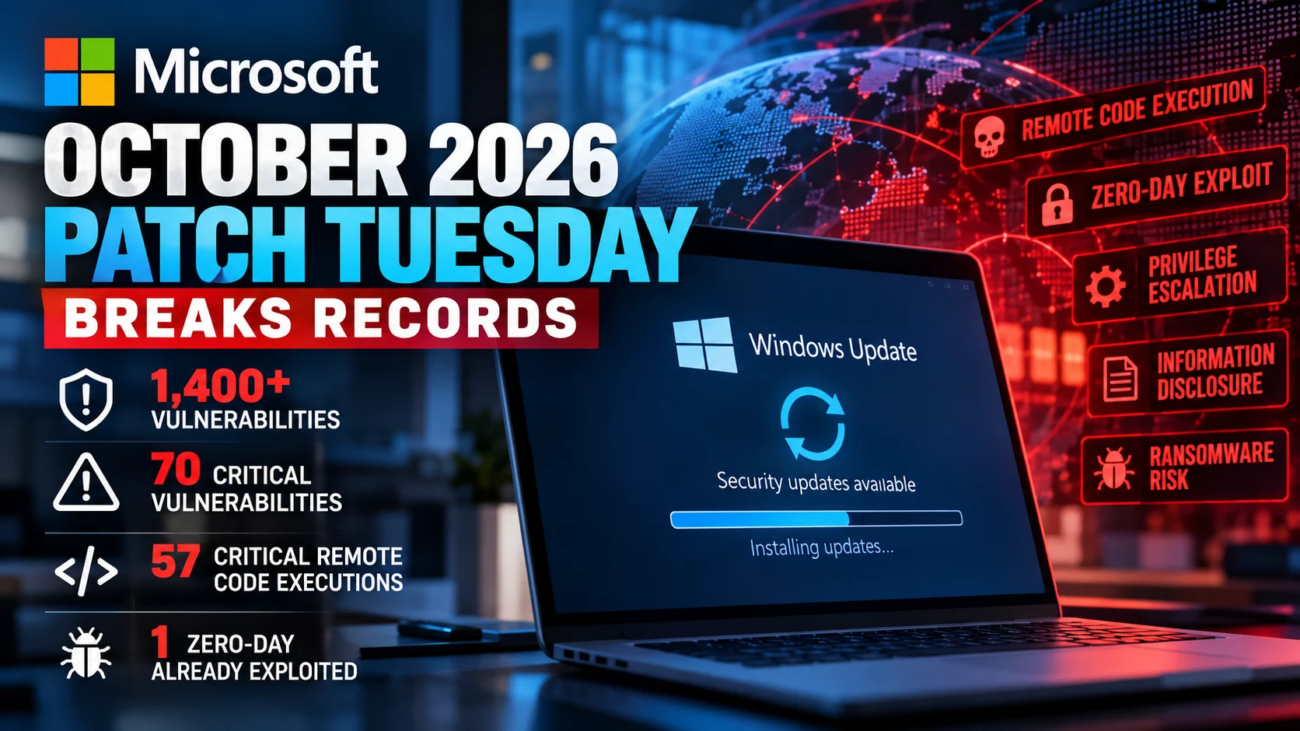
Microsoft October 2026 Patch Tuesday brought a record number of security fixes, giving businesses plenty of reasons to review their defenses. The October 13 release addressed more than 1,400 flaws across Microsoft products. For companies that rely on Windows, Office, SharePoint, and SQL Server, these updates deserve prompt attention.

BleepingComputer counted 1,411 vulnerabilities, including 70 with a Critical rating. Of those Critical flaws, 57 could allow attackers to run harmful code on affected systems. Attackers had already begun exploiting one vulnerability before Microsoft released a fix. Although totals vary by counting method, the scale of this release stands out. BleepingComputer’s report

For business leaders, this release raises a practical question: how quickly can your team identify affected systems and safely update them? Answering that question takes more than turning on automatic updates. It requires a clear device inventory, regular checks, and someone responsible for following up when installations fail.

Understanding the Security Risks

The flaws in October’s release create several paths for attackers. BleepingComputer reported 677 elevation of privilege flaws, 317 remote code execution flaws, and 254 information disclosure flaws. Its count also included 73 denial-of-service flaws, 40 security feature bypass flaws, and 28 spoofing flaws. Each category presents a different risk, from stolen data to lost access to essential services. View the vulnerability breakdown

Remote code execution, often called RCE, can let attackers run harmful instructions on a vulnerable system. Depending on the flaw, an attack might begin with a network request, a harmful document, or another entry point. A successful attack could help criminals install ransomware, steal files, or interrupt daily work.

Consider a medical practice that suddenly loses access to patient records. A similar attack could prevent a law firm from opening case files or meeting a deadline. In either situation, the damage could extend beyond the affected computer. Lost revenue, recovery costs, and damaged client trust can follow.

Elevation of privilege flaws create a different problem. An attacker may gain initial access through an employee’s account and then exploit another flaw to obtain greater control. That access could help the attacker disable security tools, read restricted files, or reach other systems. Limiting account permissions helps reduce this risk, while patching closes known software weaknesses.

Information disclosure flaws can expose private data or reveal details about a system. Even when a flaw does not directly expose client records, it may give attackers useful clues. Those clues can help them plan further attacks against the business. For firms that handle health, legal, or financial records, protecting this information remains a key responsibility.

An Actively Exploited Windows Flaw Adds Urgency

Among October’s fixes, CVE-2026-96951 deserves close attention. The Zero Day Initiative identified this Windows Shell security feature bypass flaw as actively exploited. Its analysis connects the vulnerability to bypassing Mark of the Web protections. Zero Day Initiative’s review

Mark of the Web helps Windows identify files from sources such as internet downloads. Windows uses that information to support security checks and warnings. When attackers bypass those protections, users may face harmful files without the warnings they would normally expect.

This case shows why severity ratings should not be the only factor in patching decisions. A flaw that attackers already use may demand faster action than one with a higher technical score. Businesses should identify affected devices, review Microsoft’s guidance, and test and deploy the relevant updates promptly.

Why Connected Business Networks Face Wider Risk

The Microsoft October 2026 Patch Tuesday release affects products that support everyday business operations. Windows computers, Office applications, SharePoint sites, and SQL Server databases often work together. A weakness in one part of that environment can create risks elsewhere.

The Zero Day Initiative also identified 59 flaws that fit its definition of “wormable.” Such flaws could support attacks that spread without a user signing in or taking action. That finding does not mean worms already exploit these vulnerabilities. However, it highlights why businesses should review exposed services and connected systems carefully. Read the researchers’ analysis

Attackers may combine software flaws with stolen passwords and unsafe settings to expand their reach. As a result, businesses need several layers of protection. Regular updates, limited access, monitoring, and security testing each help address a different part of the risk.

Windows 11 Users Also Face a Support Deadline

October brought another important change for some Windows users. Windows 11 version 24H2 Home and Pro reached the end of updates on October 13, 2026. Businesses still running these editions should move to a supported release. Enterprise and Education editions follow different support schedules, so checking the exact edition matters. Microsoft’s Windows release information

A device inventory provides a useful starting point. Review each computer’s Windows version and edition, then identify which devices need an upgrade. Before making changes, test the software your staff depends on. This helps your team plan the work around business needs and limit downtime.

Turning October’s Updates Into a Practical Action Plan

The first step is to match the October updates to the systems your business uses. Give prompt attention to actively exploited flaws, servers that face the internet, and systems that handle sensitive data. Testing can help catch compatibility problems, but the process also needs clear deadlines and follow-through.

Next, confirm that updates actually installed. Automatic updates can fail, and some devices remain offline for long periods. Others need a restart before a patch takes effect. A central patch management tool can help your team find missed updates and track devices that still need attention.

Account access also deserves review. Employees should have the permissions their jobs require, and administrator rights should have a clear business purpose. Remove unused accounts, review remote access tools, and use multifactor authentication to help protect sign-ins. These steps help limit what an attacker can do after gaining access.

Security testing provides another layer of insight. Updates fix known software flaws, but they do not resolve every weak password, exposed service, or unsafe setting. A vulnerability assessment helps identify known weaknesses. Penetration testing examines how attackers might exploit gaps in your defenses. The findings should lead to clear priorities, assigned owners, and checks that confirm each fix works.

Finally, review your response and recovery plans. Test whether your team can restore key files and systems from backups. Make sure employees know how to report suspicious activity and who will coordinate the response. Clear roles can reduce confusion when an incident disrupts normal work.

What This Means for Small and Medium-Sized Businesses

Small businesses use many of the same Microsoft products as large companies, but they often have fewer IT resources. A law firm with 20 employees still needs secure access to client files. A medical practice with 50 workstations still needs reliable systems to support patient care.

For these businesses, a long outage can place immediate pressure on staff, revenue, and client relationships. Recovery may also require outside help and time away from daily work. A consistent security routine helps reduce that exposure.

That routine should fit the size and needs of the business. Keep track of devices, review updates, limit access, and test backups. When internal staff lack the time or skills to manage these tasks, outside IT support can help maintain steady oversight.

How Firma IT Solutions Helps Businesses Stay Protected

At Firma IT Solutions & Services, Inc., we help businesses find security weaknesses and take practical steps to address them. Our cybersecurity and managed IT services include penetration testing, vulnerability identification, patch management, endpoint management, and ongoing IT support.

Our internal and external penetration tests examine weaknesses that attackers might exploit. We provide technical findings for IT teams and clear reports for business leaders. These reports help connect security issues to business risks, giving your team a stronger basis for deciding what to fix first.

We also help businesses manage updates and improve their daily IT practices. Keeping systems protected requires regular attention, clear ownership, and checks that confirm the work is complete. Those habits support a more reliable technology environment.

Build Security Into Everyday Business Operations

Microsoft October 2026 Patch Tuesday shows why security needs a place in routine business planning. Installing updates is an essential first step, followed by checks that confirm devices received the fixes. Access reviews, threat monitoring, backup testing, and regular security assessments help address the remaining gaps.

Businesses can make this work more manageable by assigning clear responsibilities and setting a regular schedule. Over time, consistent attention helps teams find problems earlier and respond with greater confidence.

At Firma IT Solutions, we believe: If It’s Untested, It’s Unprotected.

Protect Your Business With Firma IT Solutions

Knowing that updates exist is only part of protecting your business. You also need to know which devices remain exposed and whether your security controls work as expected. Firma IT Solutions & Services helps businesses answer those questions through practical testing and ongoing IT support.

Whether you need penetration testing, help managing updates, or broader managed IT services, our team can help you plan your next steps. Contact Firma IT Solutions today to discuss your business’s security needs.

Firma IT Solutions & Services, Inc.
Phone: 303-209-0386
Email: newbiz@firmaitss.com
Website: www.firmaitss.com

Keeps You Connected and Protected.

If It’s Untested, It’s Unprotected.