

Designer (3)

The Fortinet Breach: A Wake-Up Call for How Modern Attacks Really Work

The Fortinet Breach: A Wake-Up Call for How Modern Attacks Really Work

By Rodney Gullatte Jr.

In this article, we take a closer look at the recent Fortinet Breach and its implications.

The recent Fortinet breach is more than another cybersecurity headline. It clearly shows that attacker behavior has changed, and many organizations still have not adjusted. At its core, this breach reveals a gap that leaders continue to overlook.

This situation is not about perimeter failure. Instead, it highlights validated access at global scale.


What Actually Happened

In June 2026, researchers uncovered a large-scale compromise involving Fortinet firewall devices. Attackers breached nearly 74,000 internet-facing systems across more than 21,000 organizations in 194 countries.

More importantly, the attackers did not just gain access. They captured plaintext credentials, which gave them immediate, usable entry into these environments.

From there, the attackers moved deeper into networks. They accessed centralized authentication systems like RADIUS servers and Microsoft Active Directory. As a result, they positioned themselves inside the identity layer of enterprise environments.

This was not a quick grab for data. Instead, attackers took a controlled and deliberate approach to gain long-term access.


Why This Breach Matters

This breach stands out because it changes how we think about risk.

First, the scale matters. The number of affected devices shows that this issue spans industries and borders. Healthcare, finance, government, and enterprise organizations all face the same exposure.

Second, this attack reinforces a shift that security leaders have warned about for years. Attackers no longer focus on breaking through defenses. Instead, they focus on logging in with legitimate credentials.

When attackers use valid credentials, systems treat them as trusted users. As a result, traditional defenses often fail to detect them.

Finally, the breach shows how attackers maintain persistence. Once inside authentication systems, they no longer operate at the edge. Instead, they become part of the environment itself, which makes detection much harder.


The Real Problem: Assumed Security

Many organizations believe they are secure because they have deployed the right tools. Firewalls are configured. Endpoint protection is active. Multi-factor authentication is enabled.

However, those controls create a false sense of confidence when organizations do not test them properly.

The Fortinet breach proves this point. The attackers used real credentials. The systems responded exactly as designed. Access worked as expected.

That is exactly why the attack succeeded.

Security teams did not fail to deploy controls. Instead, they failed to validate how those controls behave under real-world attack conditions.


Why Penetration Testing Matters Now

Penetration testing changes the conversation from assumptions to evidence. It forces organizations to see how their environment performs under pressure.

More importantly, it answers a critical question. If an attacker gains access today, what happens next?

In the Fortinet scenario, penetration testing could have exposed several key risks early. For example, it could have shown how easily valid credentials provide access to external systems. It also could have mapped how far an attacker could move once inside the network.

Additionally, penetration testing would show which systems and data become reachable after initial compromise.

These insights matter because they reflect exactly how attackers operate.

Penetration testing does more than identify individual weaknesses. It demonstrates how attackers chain those weaknesses together. It shows the real path from entry to impact.

In cases like this, where attackers moved into authentication systems, a strong penetration test reveals critical gaps. These gaps often include poor segmentation, excessive permissions, limited visibility, and weak detection controls around legitimate access.

As a result, organizations gain clarity into risks that traditional tools often miss.


A Shift in How Leaders Think About Security

The Fortinet breach should push every organization to rethink how it measures security.

Security does not come from the tools you deploy.
Security comes from what you have tested and proven.

At the same time, attackers already test environments every day. They search for weak credentials, misconfigurations, and trust relationships they can exploit. They use automation and scale to their advantage.

If organizations do not match that level of testing, they fall behind.

Penetration testing helps close that gap. It aligns defensive strategies with real attacker behavior. It gives organizations a clear view of how their environment appears to an adversary.


Final Thought

The Fortinet breach is not just a technical issue. It reflects a larger problem across the cybersecurity landscape. Too many organizations rely on assumptions instead of evidence.

Attackers do not assume. They test.

That leaves every organization with one simple question.

Are you doing the same?

Because in today’s environment, the organizations that test themselves thoroughly are the ones that can fix weaknesses before they turn into public incidents.


ChatGPT Image Jun 15, 2026, 10_17_32 PM

Virta Health Data Breach in Colorado: Why Healthcare Penetration Testing Is More Important Than Ever

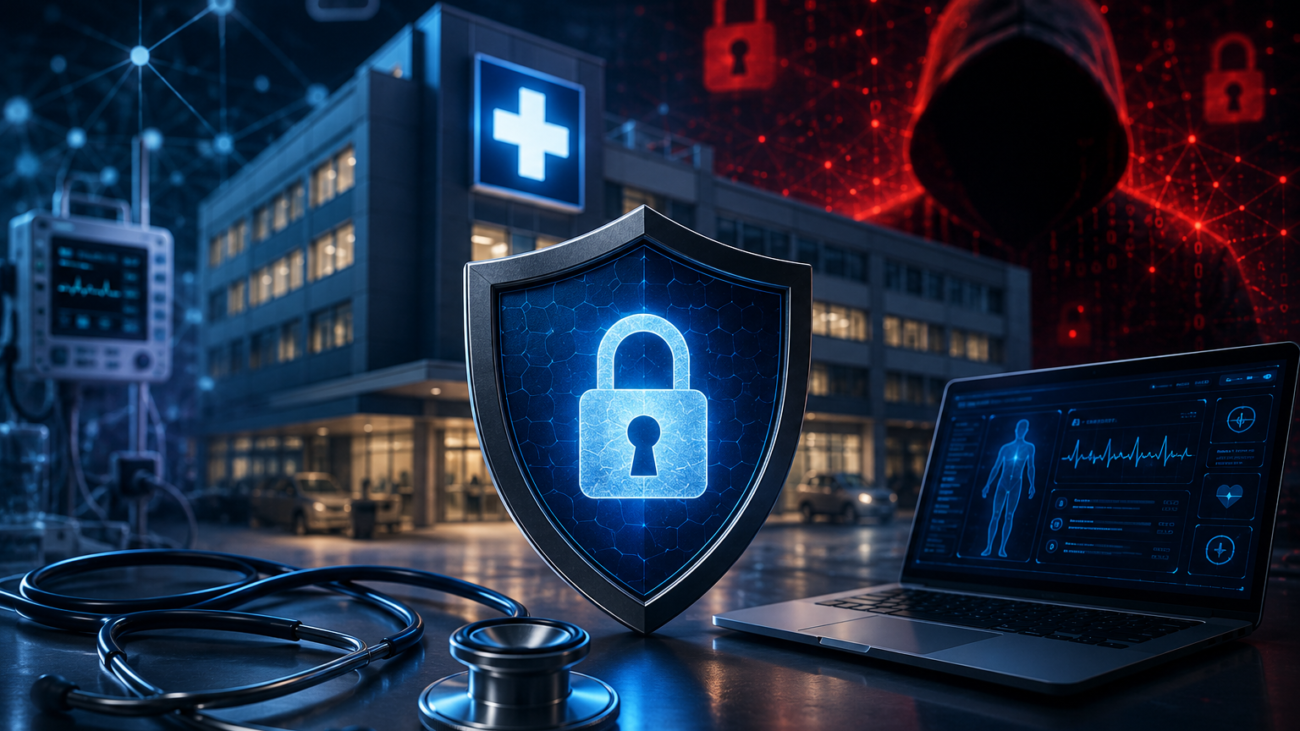
Healthcare data breaches continue to reveal one hard truth: sensitive patient information has real value, and attackers know it. The recent Virta Health data breach reminds healthcare leaders that basic security tools, written policies, and good intentions do not provide enough protection on their own.

Today’s threat landscape requires healthcare organizations to test their defenses before attackers do.

Virta Health Corp. and Virta Medical, P.C., collectively referred to as Virta Health, reported a security incident involving a data repository that sat outside its current production platform. According to public notices, Virta Health identified unauthorized activity on March 24, 2026. Investigators determined that someone may have accessed certain files in the repository between March 19, 2026, and March 22, 2026.

The information involved was serious. Public notices state that the repository may have exposed names, Social Security numbers, Individual Tax Identification Numbers, dates of birth, health insurance information, medical diagnosis information, treatment information, facility information, service dates, medical record numbers, and other unique health identifiers.

That type of data is not just personal. It is deeply sensitive.

Unlike a stolen credit card, medical information cannot simply be canceled and replaced. A person’s diagnosis, treatment history, health identifiers, and Social Security number can follow them for years. Criminals can use this information for identity theft, medical fraud, phishing, extortion, and targeted scams. In some cases, victims may not discover the abuse until long after the breach.

For that reason, healthcare cybersecurity is not just an IT issue. It is a patient trust issue.

Why This Breach Matters to Colorado Healthcare Organizations

Virta Health has been described as a Denver, Colorado-based digital health provider focused on helping people manage type 2 diabetes, prediabetes, and obesity. Although the incident did not involve Virta’s current production platform, the separate repository still contained sensitive personal and health information.

That distinction matters.

Many organizations place most of their security focus on the main application, electronic health record system, or production environment. Meanwhile, attackers often search for systems that receive less attention. These systems may include old repositories, testing environments, backups, file shares, cloud storage buckets, reporting databases, vendor-accessible folders, or legacy systems that teams never fully retired.

In other words, the weakest point is often not the system everyone watches. It is the system everyone forgot about.

Healthcare organizations across Colorado should treat this breach as a warning. If sensitive data exists anywhere in the environment, the organization must protect it, monitor it, test it, and validate its security. Leaders cannot simply say, “That repository is separate from production.” If it contains patient data, it still creates risk.

Why Attackers Target Healthcare

Healthcare organizations attract attackers because they hold some of the most valuable data in the world. A single patient record can contain a full identity profile, including a name, date of birth, address, insurance details, Social Security number, medical history, and billing information.

Because of that, attackers can use healthcare data in many ways. They can sell it. They can use it for fraud. They can build convincing phishing attacks with it. They can also use it to pressure organizations during extortion attempts.

Healthcare environments also tend to be complex. Many organizations manage cloud platforms, remote workers, third-party vendors, patient portals, billing systems, medical devices, file repositories, and legacy applications. Every connection creates another possible attack path.

That is where penetration testing becomes critical.

What Penetration Testing Does

Penetration testing is a controlled, ethical security assessment that simulates how a real attacker would attempt to break into an organization’s systems. The goal is not to cause harm. The goal is to find weaknesses before criminals find them.

For healthcare organizations, penetration testing can help identify:

  • Weak or exposed remote access systems
  • Misconfigured cloud storage or repositories
  • Poor access controls
  • Weak passwords or missing multi-factor authentication
  • Vulnerable web applications
  • Unpatched systems
  • Over-permissioned user accounts
  • Lack of network segmentation
  • Poor logging and monitoring
  • Paths attackers could use to move from one system to another

Most importantly, penetration testing helps answer the question every healthcare leader should ask:

“If an attacker got in today, what could they access?”

A firewall dashboard cannot answer that question. A policy document cannot answer it either. Even a strong IT team cannot answer it through assumption alone.

The organization must test its defenses.

Why “Separate From Production” Is Not Enough

One key detail from the Virta Health notice is that the unauthorized activity involved a data repository separate from the current production platform. At first glance, that may sound reassuring. From a cybersecurity standpoint, however, separate does not always mean secure.

A separate repository can still contain sensitive data. It can still store user credentials. Cloud services may still connect to it. Employees or vendors may still access it. The repository may still contain misconfigurations, weak permissions, or exposed files. Security teams may also overlook it during routine reviews because it does not sit inside the main production environment.

Penetration testing helps uncover those blind spots.

A strong penetration test does not only look at the obvious front door. It also looks for side doors, forgotten doors, poorly locked doors, and doors no one realized were still open.

This matters even more in healthcare, where data often moves between systems for reporting, analytics, claims, care coordination, research, customer support, and operations.

Compliance Alone Is Not Protection

Many healthcare organizations believe HIPAA compliance means they are secure. Unfortunately, compliance and security are not the same thing.

Compliance helps establish required policies, safeguards, and responsibilities. Attackers, however, do not care whether a policy exists. They care whether they can exploit a weakness.

A healthcare organization may have policies that require access controls, encryption, monitoring, and vendor review. But unless the organization tests those controls, leadership may not know whether they actually work.

Penetration testing turns assumptions into evidence.

It shows which controls work, which controls fail, and which risks need immediate attention. It also gives executives and board members a clearer picture of real-world exposure.

The Business Impact of a Healthcare Breach

The cost of a healthcare data breach goes far beyond technical cleanup. Organizations may face legal fees, notification costs, credit monitoring expenses, regulatory scrutiny, operational disruption, reputational damage, and loss of trust.

For digital health companies, the reputational impact can be especially serious. Patients and sponsoring organizations must trust that the company handles sensitive health information responsibly. Once an organization loses that trust, rebuilding it can take years.

That is why proactive testing costs far less than reactive damage control.

A penetration test may reveal issues that feel uncomfortable. However, finding those issues privately is much better than discovering them after an attacker has already accessed sensitive data.

What Healthcare Leaders Should Do Now

The Virta Health breach should push healthcare leaders to review their own environments. Start with a few direct questions:

  • Where does our organization store sensitive patient data?
  • Do we include old repositories, backups, and test systems in security reviews?
  • Who has access to those systems?
  • Do we enforce multi-factor authentication everywhere?
  • Does our team regularly review cloud systems for misconfigurations?
  • Could attackers move laterally if they compromised one account?
  • Do we monitor logs for unusual access?
  • Has an independent penetration test evaluated our environment recently?

When leadership cannot answer these questions clearly, the organization has work to do.

Penetration Testing Protects Patient Trust

The lesson from the Virta Health data breach goes beyond one organization. Healthcare data needs protection everywhere it lives.

Production systems matter. Cloud repositories matter. Backups matter. Vendor access matters. Old databases matter. Test environments matter. Every system that stores or touches patient data can become a target.

Penetration testing helps healthcare organizations find and fix real security gaps before attackers exploit them. It gives leadership visibility. It helps IT teams prioritize risk. It supports compliance. Most importantly, it helps protect patients.

In healthcare, cybersecurity is not just about protecting systems.

It is about protecting people.

Contact Firma IT Solutions today at 303-209-0386 to learn how we can help keep your business connected and protected.

CLICK HERE TO REQUEST A PENETRATION TEST QUOTE FOR SERVICE

advanced_network_security_strategies_gl0ia

BEYOND THE FIREWALL: PROTECTING CUSTOMER DATA WITH ADVANCED NETWORK PENETRATION STRATEGIES

You can’t rely on firewalls alone to protect customer data in today’s threat landscape. Modern attacks bypass traditional defenses through AI-powered techniques and social engineering. Firma IT Solutions, with over 20 years of experience and a 4.8 Google rating, specializes in certified network penetration testing and ethical hacking to identify these vulnerabilities. To stay ahead, you’ll need a multi-layered approach: implement continuous monitoring systems, conduct regular penetration testing, and maintain strict access controls. Zero-trust architecture and advanced authentication help prevent lateral movement by attackers. The journey to true data security requires going far beyond basic perimeter defenses. Call now for your initial assessment and protect your customer data with industry-leading expertise.

Key Takeaways

  • Implement continuous AI-powered monitoring systems to detect and respond to suspicious network activity in real-time.
  • Deploy zero-trust architecture requiring authentication for all access attempts, preventing unauthorized lateral movement within networks.
  • Conduct regular penetration testing with clear objectives to identify vulnerabilities before attackers can exploit them.
  • Apply robust encryption protocols for customer data both in transit and at rest across all network segments.
  • Establish automated incident response systems that can instantly detect, isolate, and neutralize potential security threats.

Understanding Modern Network Security Challenges

While I’ve spent years helping organizations protect their networks, I’ve never seen security challenges evolve as rapidly as they’re now in 2025.

You’re facing a perfect storm – over 30,000 vulnerabilities each year, and attackers who can strike within hours of finding a weakness. Trust me, I’ve learned the hard way that traditional defenses just don’t cut it anymore.

Your vulnerability assessment needs to be smarter and faster than ever. Modern security requires AI-powered monitoring systems to detect and respond to threats in real-time. Organizations must embrace zero-trust architecture to ensure continuous verification of all access attempts.

I’m seeing threat intelligence reveal attackers targeting everything from 5G networks to remote workers. They’re launching multi-vector attacks that hit from all angles, and they’re particularly fond of exploiting those overlooked systems you might’ve forgotten about.

The rapid advancement of technology has left many organizations vulnerable, especially with end-of-life Windows 10 creating significant security risks for unprepared companies.

Essential Components of Effective Penetration Testing

After spending over a decade conducting penetration tests, I’ve learned that effective testing requires five essential components that work together like a well-oiled machine.

You’ll want to start by nailing down your test objectives and compliance requirements – trust me, I learned this the hard way after a few early fumbles. HIPAA compliance is especially critical when testing healthcare systems to protect sensitive patient data.

Next, immerse yourself in reconnaissance like you’re solving a puzzle, gathering every detail about your target. Financial fraud prevention has become a critical focus for institutions safeguarding customer assets.

Then move into vulnerability scanning, where you’ll uncover the weak spots. Selecting the right testing methodology framework will significantly enhance your vulnerability assessment effectiveness.

Follow up with controlled exploitation to prove what’s really at risk. Finally, wrap it all up with clear, actionable reporting that’ll drive real change.

Strategic Approaches to Customer Data Protection

Penetration testing might reveal vulnerabilities, but protecting customer data requires a thorough strategy I’ve found over my years in cybersecurity. You’ve got to think like a defender and an attacker simultaneously. I’ve found that managing the complete data lifecycle, from creation to disposal, forms your foundation.

I always start with strict access controls – they’re your first line of defense. With potential data breaches costing an average of $4.35 million, organizations can’t afford to take chances.

Then layer in encryption strategies for data both in motion and at rest. Implementing zero trust architecture has become essential for maintaining comprehensive security standards.

Add continuous monitoring to catch issues early, and regular risk assessments to stay ahead of threats. Organizations with mature response plans can save up to $2.66M in breach-related costs.

Trust me, this multi-layered approach keeps your customer data locked down tight.

Advanced Exploitation Techniques and Defense Mechanisms

Since discovering AI-powered threats in my network security practice, I’ve had to completely transform how I approach defense mechanisms.

What used to work against basic malware now fails against AI Malware that mutates in real-time. I’ve learned some hard lessons about staying ahead of these evolving threats. Continuous threat detection has become essential for identifying and neutralizing sophisticated attacks before they can cause damage.

  1. Deploy AI-powered monitoring systems that catch suspicious activity 24/7
  2. Implement zero-trust architecture to stop lateral movement dead in its tracks
  3. Use advanced authentication to prevent Deepfake Impersonation of executives
  4. Set up automated incident response systems that neutralize threats instantly

You’ve got to think like the attackers to protect your data. When they automate their attacks, we must automate our defenses even better. The rise of ransomware-as-a-service has made it easier than ever for criminals to launch devastating attacks against organizations.

Regular penetration testing has become crucial for validating security measures and staying ahead of emerging threats.

Building a Resilient Security Framework Through Testing

The countless hours I’ve spent battling AI-powered threats have taught me one unmistakable truth – we can’t just react to attacks anymore. You’ve got to build resilience into your security framework from day one, and I’ll show you how.

Start by integrating security testing frameworks throughout your development cycle, not just at the end. Our network penetration testing solutions identify vulnerabilities across your critical assets before malicious actors can exploit them.

Customer data protection remains paramount for maintaining trust and regulatory compliance in the automotive industry. I’ve learned this the hard way after countless sleepless nights patching vulnerabilities that could’ve been caught earlier. Implementing IAST runtime monitoring provides real-time insights into vulnerabilities as they emerge during testing phases.

Your security policies need to evolve with the threats, and testing must be continuous. Trust me, it’s better to find the weak spots yourself before the bad guys do.

Frequently Asked Questions

How Frequently Should Organizations Conduct Network Penetration Testing for Optimal Security Coverage?

You’ll want to conduct frequency analysis quarterly, but adjust testing intervals based on your risk level – monthly for high-risk sectors, annually for low-risk businesses, and immediately after major system changes.

What Certifications or Qualifications Should Professional Penetration Testers Possess?

Like a master locksmith, you’ll need core certifications including CEH or OSCP to prove your ethical hacking expertise. Don’t overlook CompTIA PenTest+ and GPEN – they’re your keys to professional penetration testing freedom.

How Do Cloud Environments Affect Penetration Testing Methodologies and Scope?

You’ll need to adapt your cloud security testing tools for shared infrastructure limits, dynamic asset discovery, and provider restrictions. Focus on IAM configurations and respect tenant boundaries while conducting automated and manual assessments.

Don’t bite off more than you can chew – you’ll need explicit written third party agreements and legal compliance documentation before testing others’ systems. Always get permission from every system owner to avoid criminal charges.

How Can Organizations Measure the Return on Investment From Penetration Testing?

You’ll maximize ROI by conducting thorough cost analysis of prevented breaches versus testing expenses, while your risk assessment data shows vulnerabilities found and fixed – directly measuring the value of your security investment.

Conclusion

You’re on the front lines of a constantly changing digital battlefield, where protecting customer data isn’t just a priority – it’s your mission. With over 20 years of experience, Firma IT Solutions stands as your trusted guardian in cybersecurity excellence. Our certified network penetration testing and ethical hacking services continuously adapt your defenses, test your fortress’s walls, and stay steps ahead of those who’d breach them. Backed by a 5.0 Google rating, our rigorous penetration testing and layered security strategies build an impenetrable shield that keeps your customers’ trust intact and their data secure. Call now for your initial assessment and fortify your digital defenses today.

CLICK HERE TO REQUEST A PENETRATION TEST QUOTE FOR SERVICE

ChatGPT Image Jun 8, 2026, 04_11_17 PM

The Hidden Cybersecurity Threat Lurking Inside Multi-Tenant Office Buildings

Shared Office Network Security: The Hidden Cybersecurity Threat Lurking Inside Multi-Tenant Office Buildings

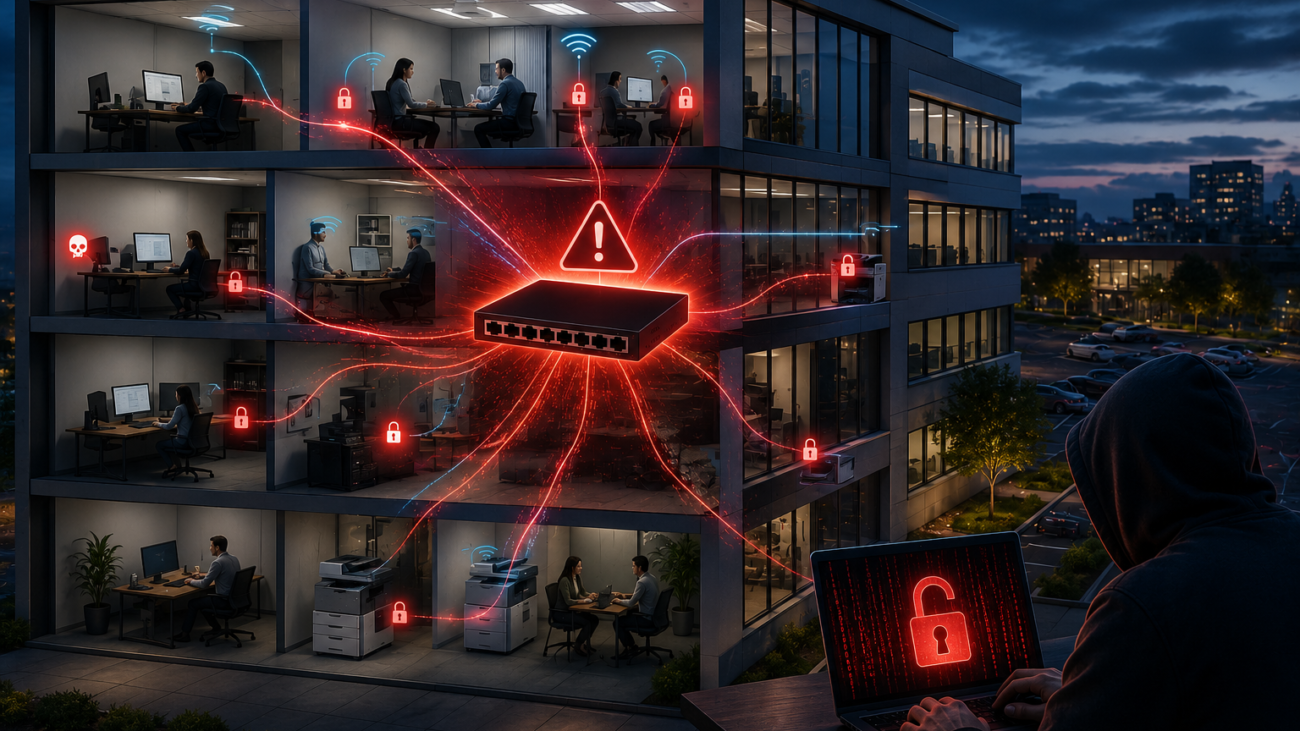
Shared office network security is a growing concern for businesses operating in multi-tenant office buildings. Many companies assume they are protected because their computers work, the internet is fast, and the printer connects without issue. Unfortunately, those assumptions can create significant cybersecurity risks. When multiple businesses share the same network infrastructure without proper security controls, a cyberattack against one tenant can quickly become a cyberattack against everyone.

Across the country, countless office buildings house multiple businesses that share internet connections, networking equipment, and wireless infrastructure. In many cases, building owners provide internet access as an amenity, and tenants simply plug in and get to work.

However, many business owners never realize they may be sharing a network with every other company in the building.

Why One Compromised Computer Can Become Everyone’s Problem

Cybercriminals rarely stop at the first device they compromise.

Instead, once attackers gain access to a computer, they immediately search for other systems on the network. Security professionals call this process lateral movement. During this phase, attackers identify additional computers, servers, printers, network devices, and other connected systems.

Without proper network segmentation and security controls, attackers can potentially:

  • Access computers belonging to other tenants
  • Discover shared files and printers
  • Capture network traffic
  • Harvest usernames and passwords
  • Deploy ransomware across multiple organizations
  • Spread malware throughout the building
  • Disrupt operations for every tenant

As a result, a single employee clicking a malicious email attachment could trigger a cybersecurity incident that affects every company in the building.

“But We’re Not a Target”

Shared Office Network Security

This belief remains one of the most dangerous misconceptions in cybersecurity.

In reality, attackers do not care whether your company has five employees or five thousand employees. Modern cybercriminals use automated tools that continuously scan the internet for vulnerable systems.

Therefore, if your business shares an exposed network with other tenants, your security may only be as strong as the least secure company in the building.

For example, your organization may enforce strong passwords, multifactor authentication, endpoint protection, and security awareness training. Meanwhile, another tenant may operate outdated computers, weak passwords, or no cybersecurity protections at all.

When everyone shares the same network, everyone shares the same risk.

The Liability Question for Building Owners

Building owners and property managers should pay close attention to this issue.

Although liability varies by jurisdiction and contractual agreements, providing internet service without proper network segmentation can create significant legal and financial exposure.

Following a cyber incident, investigators, attorneys, insurance carriers, and affected tenants may ask important questions:

  • Did the building owner implement reasonable security measures?
  • Were tenants informed they shared a network with other businesses?
  • Was network segmentation available but never deployed?
  • Were known cybersecurity risks ignored?
  • Was the network represented as secure when it was not?

Furthermore, if ransomware spreads from one tenant to another because every business operates on the same unrestricted network, investigators will closely examine how the network was designed and managed.

Ultimately, the cost of implementing proper cybersecurity controls is often insignificant compared to the financial, operational, and legal consequences of a major breach.

The Hidden Risk of Sharing a Network with Other Businesses

Shared Office Network Security

Many tenants have no idea they are exposed.

Most business owners focus on serving customers, generating revenue, and managing daily operations. Consequently, they often assume that if the internet works and systems connect properly, everything must be secure.

Unfortunately, functionality and security are not the same thing.

A business may unknowingly share network space with:

  • Insurance agencies
  • Healthcare providers
  • Law firms
  • Financial services companies
  • Collection agencies
  • Retail businesses
  • Contractors
  • Professional service firms

Each organization brings a different level of cybersecurity maturity and risk.

As a result, one compromised system can become a bridge into every other organization connected to the same network.

What Proper Shared Office Network Security Should Look Like

A properly designed business network separates each tenant from every other tenant.

Cybersecurity professionals typically accomplish this through:

  • VLAN segmentation
  • Firewall isolation
  • Network access controls
  • Secure wireless architecture
  • Traffic filtering and monitoring
  • Separate guest and business networks

These controls create barriers between organizations and significantly reduce the likelihood of a compromise spreading across multiple businesses.

Think of it this way: if a fire starts in one apartment, firewalls and barriers help prevent the entire building from burning down.

The same principle applies to cybersecurity.

Why Network Segmentation Matters

Network segmentation serves as one of the most effective defenses in a multi-tenant environment.

Without segmentation, every device on the network may be able to communicate with every other device. Consequently, attackers can move freely between systems once they gain an initial foothold.

With proper segmentation, however, each tenant operates within its own protected environment. Even if one organization experiences a cybersecurity incident, attackers face significant barriers when attempting to reach neighboring businesses.

For this reason, network segmentation should be considered a fundamental component of office building cybersecurity.

Businesses Still Need Their Own Security

Even when a building provides a secure network, each tenant must still protect its own environment.

Therefore, every organization should implement:

  • Endpoint protection
  • Multi-factor authentication
  • Security awareness training
  • Vulnerability management
  • Regular backups
  • Network monitoring
  • Penetration testing

Most importantly, building security and tenant security must work together as layered defenses.

Neither one alone provides sufficient protection.

Don’t Assume Your Shared Office Network Security Is Adequate

If your office is located in a multi-tenant building and you are unsure how the network is configured, now is the time to ask questions.

Ask your building owner or property manager:

  • Who manages the network?
  • Are tenants separated from one another?
  • Can devices belonging to other businesses communicate with our systems?
  • Has the network undergone a network security assessment?
  • What controls protect tenants from each other?

If you do not know the answers, your business may be carrying far more risk than you realize.

At Firma IT Solutions, we help organizations identify hidden weaknesses through network security assessments, penetration testing, and cybersecurity consulting. Before a cybercriminal discovers a weakness in your environment, make sure a trusted cybersecurity professional finds it first.

Contact Firma IT Solutions today at 303-209-0386 to learn how we can help keep your business connected and protected.

CLICK HERE TO REQUEST A PENETRATION TEST QUOTE FOR SERVICE

healthcare cybersecurity threats 2026

Healthcare Cybersecurity Threats 2026: Why Penetration Testing Matters More Than Ever

Healthcare cybersecurity threats 2026 are growing fast, and many organizations are not ready.

Today, hospitals, clinics, medical groups, imaging centers, and healthcare networks face nonstop cyberattacks. Attackers are no longer using slow and simple methods. Instead, they now use automation, artificial intelligence, stolen passwords, and ransomware to find weak spots before healthcare teams even know those weak spots exist.

Because of this, healthcare cybersecurity threats 2026 have become one of the biggest risks facing the healthcare industry.

Attackers Are Scanning Healthcare Networks All Day Long

Cybercriminals are always scanning healthcare systems for:

  • Weak passwords
  • Open remote access
  • Old software
  • Unsecured apps
  • Exposed systems

Fortinet reported 640 billion scanning events and more than 121 billion exploit attempts in 2025 alone. As a result, attackers can now find and attack weak systems very quickly.

Healthcare groups are top targets because criminals know hospitals cannot afford downtime.

If systems go offline, patient care suffers. Therefore, many attackers believe healthcare organizations may pay faster to restore operations.

Because of this, healthcare cybersecurity threats 2026 are now a business risk for executives and boards — not just an IT issue.

Why Healthcare Systems Are Easy Targets

Modern healthcare networks are large and connected. They often include:

  • Electronic Health Records (EHR)
  • Patient portals
  • Medical devices
  • Cloud apps
  • VPN access
  • Remote workers
  • Third-party vendors
  • Older systems
  • Mobile devices
  • APIs and integrations

Every connected system creates another possible entry point.

According to the Unit 42 Global Incident Response Report 2026, 87% of attacks involved more than one attack surface. In other words, attackers move through several systems once they get inside.

Many healthcare organizations also deal with:

  • Older equipment
  • Small IT teams
  • Too many user accounts
  • Weak access controls
  • Vendor risk
  • Gaps in security coverage

Together, these issues make healthcare organizations easier to attack.

AI Is Making Cyberattacks Faster

Artificial intelligence is changing cybercrime quickly.

For example, the World Economic Forum found that AI-related risks are now one of the fastest-growing cyber concerns.

At the same time, Cloudflare reported that AI is helping criminals:

  • Create phishing emails
  • Build fake voice and video scams
  • Steal passwords
  • Create malware
  • Scan systems faster

Unit 42 also found attackers can now steal data within 72 minutes after gaining access.

As a result, healthcare cybersecurity threats 2026 are moving faster than many healthcare teams can respond.

Identity Has Become the Main Target

One of the biggest healthcare cybersecurity threats 2026 is stolen identity access.

Years ago, cybersecurity focused mostly on firewalls and network protection. However, attackers now focus on usernames, passwords, sessions, and access rights.

Unit 42 found identity weaknesses played a role in almost 90% of investigations.

Today, attackers often use:

  • Stolen passwords
  • Session hijacking
  • MFA fatigue attacks
  • OAuth abuse
  • Over-permissioned accounts
  • Weak trust settings

Healthcare organizations are especially at risk because they often have:

  • Large employee groups
  • Vendors
  • Contractors
  • Remote workers
  • Shared systems
  • Connected medical apps

Because of this, one stolen login can lead to:

  • Patient data theft
  • Ransomware attacks
  • Cloud compromise
  • Email compromise
  • Full network shutdowns

Clearly, many healthcare cybersecurity threats 2026 now focus more on identity than malware.

Most Breaches Could Have Been Prevented

One important fact stands out about healthcare cybersecurity threats 2026:

Most breaches are preventable.

In many cases, attackers succeed because of:

  • Weak passwords
  • Poor setup choices
  • Missing patches
  • Too much access between systems
  • Limited monitoring

Unit 42 found that more than 90% of breaches involved preventable security gaps.

Likewise, IBM X-Force found many attacks were linked to:

  • Weak login security
  • Poor access controls
  • Bad system setup
  • Missing logs
  • Weak patch management

These are exactly the kinds of problems a Penetration Test can help uncover.

Why Penetration Testing Is So Important

A Penetration Test is much more than a basic scan.

Instead, it safely simulates a real cyberattack to show how attackers could break into your healthcare environment.

A Penetration Test can help find:

  • Critical weaknesses
  • Weak passwords
  • Open remote access
  • Cloud security gaps
  • Poor network separation
  • Unsafe APIs
  • Vendor risks
  • Ways attackers could move through the network

Most importantly, Penetration Testing shows the real business risk before criminals take advantage of it.

As healthcare cybersecurity threats 2026 continue to grow, organizations that do not test their systems may already have hidden risks they do not know about.

Attackers Are Moving Faster Than Ever

Another major problem is how quickly attacks now happen.

Fortinet found attackers often start using new weaknesses within 24 to 48 hours after they become public.

At the same time:

  • Passwords are sold online
  • Exploit tools are shared quickly
  • AI speeds up attacks
  • Automated scans run nonstop

Because of this, healthcare organizations no longer have weeks to react.

Sometimes they only have hours.

Therefore, organizations that only react after problems appear are already behind.

Ransomware Is Still a Huge Threat

Ransomware remains one of the biggest healthcare cybersecurity threats 2026.

Veeam research found:

  • 69% of organizations suffered ransomware attacks
  • Data theft is increasing
  • Attack speed is increasing
  • Many victims get attacked more than once

Healthcare organizations face even greater risk because downtime can affect patient care.

As a result, ransomware can cause:

  • Delayed care
  • HIPAA problems
  • System outages
  • Financial loss
  • Legal issues
  • Reputation damage
  • Loss of patient trust

In many cases, the cost of a breach is far greater than the cost of preventive testing.

Healthcare Leaders Must Take Action Now

Healthcare cybersecurity threats in 2026 require a more proactive approach.

Organizations can no longer depend only on:

  • Firewalls
  • Antivirus software
  • Compliance checklists
  • Managed IT support
  • Basic scans

Instead, healthcare organizations should:

  • Find weak spots early
  • Test defenses often
  • Improve password security
  • Limit access between systems
  • Improve monitoring
  • Practice incident response
  • Conduct regular Penetration Testing

Most importantly, Penetration Testing gives leaders a real view of how attackers could get inside their environment.

The Bottom Line

Healthcare cybersecurity threats in 2026 are growing quickly.

Attackers are now:

Meanwhile, healthcare remains one of the top targets because criminals know downtime creates pressure.

The question is not whether attackers are scanning your systems.

They already are.

The real question is whether your organization will find the weak spots first — or whether attackers will.

Contact Firma IT Solutions

At Firma IT Solutions, we provide professional Penetration Testing for healthcare organizations across the United States.

We help organizations identify:

  • External risks
  • Internal weaknesses
  • Identity risks
  • Cloud security gaps
  • Lateral movement paths
  • Hidden security issues before attackers find them

Do not wait until your organization becomes tomorrow’s headline.

📞 303-209-0386
🌐 www.firmaitss.com

Contact Firma IT Solutions today for a risk-free Penetration Testing quote.